Images
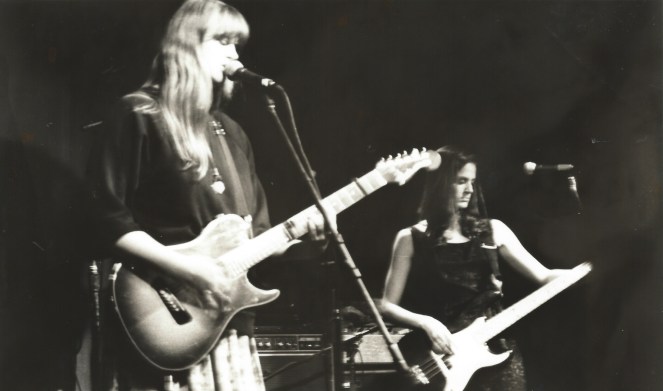
Barbara Manning and Michelle Cernuto of the SF SEALS, circa 1992. Live at The Chameleon, San Francisco.
Photo by Nicole Penegor.
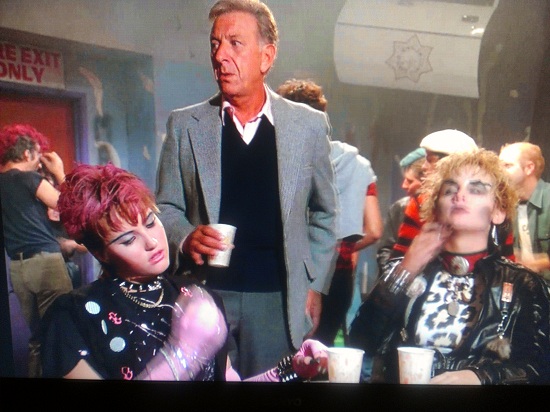
Originally written on my Agony Shorthand blog, August 2005….
THE MAINSTREAM MEDIA vs. PUNK ROCK USA
Long before “the year that punk broke”, there was always a ton of pleasure to be derived from watching how the mainstream media skimmed the surface of the punk rock phenomenon, botched it up & spat it back for the hoi polloi. I was a rabid media hound from early on, still am, and I remember reading TIME MAGAZINE’s initial depiction of punk rock in 1977, read in the safety of my parents’ living room in Sacramento, CA. Thanks to MD alerting me to it; you too can read it right here.
I was so taken by what I’d read at the time that I told everyone at school about the crazy spitting punks, particularly “The Dead Boys”, whose name really knocked me for a loop. Some years later while in college, I actually burrowed deep into the microfilm room @ the college library just so I could devour this weak article again, such was its impact. (I also couldn’t believe they had a picture of THE WEIRDOS, a band that virtually no one outside of California was talking up in the mid-80s). How about the roll call of nihilistic punk band names – THUNDERTRAIN?!? (if you’ve heard that recent Gulcher CD by them, you’ll have an even bigger laff). All in all, I guess this punk depiction isn’t too uproarious – it got worse, believe me.
Like the Kennedy assassination and 9/11, just about everyone remembers where they were the days the “punk rock” episodes of awful American prime time TV shows QUINCY and CHiPs aired. I saw the Quincy episode, “Next Stop Nowhere”, the day it aired in 1982. It featured a FEAR-inspired band called “Mayhem” who were just godawful, but who rocked the fuck out when stacked next to CHiPs’ horrible retard fake punk band “Pain” (“…I dig PAIN….”). Mayhem’s hot signature tune went something along the lines of “I wanna see you CHOKE – CHOKE!!!!”. What caused the death of the kid at the start of the show? Why, punk rock of course. As this site recalls, “…Dancing to the sound of the Tommy Dorsey Orchestra, Quincy asks Dr. Emily Hanover why anyone would ‘want to listen to music that makes you hate, when you can listen to music that makes you love’”. Click the links and learn more – you’ll be glad you did.
Ridiculous as that one was, the CHiPs punk episode was off the charts incredible. This was one of the worst shows in American TV history to begin with, coinciding of course with a late 70s era in which practically all my sister and I did Monday through Friday was watch 3 hours of prime time network TV. Thankfully by 1982 I was well onto other pursuits, therefore I missed the live airdate of this, and instead watched it stoned on a couch in college a few years later. You can read about it too all over the web, but the end, in which Erik Estrada gets the previously violent slam-dancing punks to mellow out & disco-dance to his version of Kool & The Gang’s “Celebration”, is, as they say, “priceless”.
Finally, there were the talk shows of the early/mid 80s that featured distraught parents trying to understand their punker teenagers. I have seen a few of these Merv Griffin-esque shows that were pretty funny, but the one that I remember best was a Los Angeles-area show called “Hot Seat” , hosted by WALLY GEORGE. George was some Hollywood liberal’s trumped-up idea of what a televised conservative should be – an intolerant, ranting racist who hated homos and just about everyone else. It wasn’t great comedy, but it featured a parade of buffoons who could barely read their lines & who did their best to make the scripted shenanigans sound like true pathos. One day George had a group called “Parents of Punkers” on, along with many of Orange County’s finest mohawked punks and leather-clad skins. The weeping parents talked up the idea of military-style boot camp for their kids, the punks hissed, slammed to music at the breaks and started fake fights, while Wally George grunted and yelled about degeneracy and “the awful music, you can’t even hear the words” etc.
At the time all this stuff actually felt unfair to fans of punk – so demeaning, “if only they asked some real punks” and all that (get out your old Flipsides and MRRs – there were multiple letters along these lines about these shows). Now that the punks have won (!), punk broke, and great real punk bands like The Offspring & Green Day went to #1, well, we all had the last laugh, didn’t we. Someone should revive this Austin, TX showing of all this stuff under one banner, pack it on a DVD and sell an assload of it. I’ve no doubt that the market is there. My Paypal account is ready.
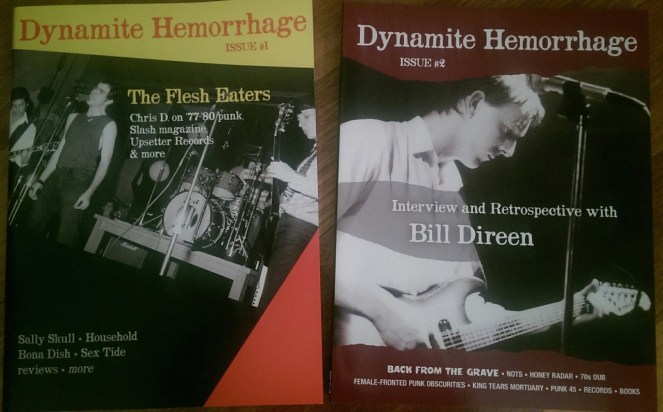
Two issues of Dynamite Hemorrhage fanzine are available to order.
Issue #1 came out the final week of 2013. I’ve only got about 40 of these left to sell, and they’re going pretty fast. Learn more and order yours here.
Issue #2’s only a few months new. Plenty of these to be had. Learn more and order yours here.

This book’s about to come out, and will start accepting pre-orders this weekend. From what I’ve seen on their Facebook page over the last year, they’ve got a ton of great interviews in the can, and it’s not merely about San Pedro but the entire South Bay punk/post-punk scene at the height of its powers.
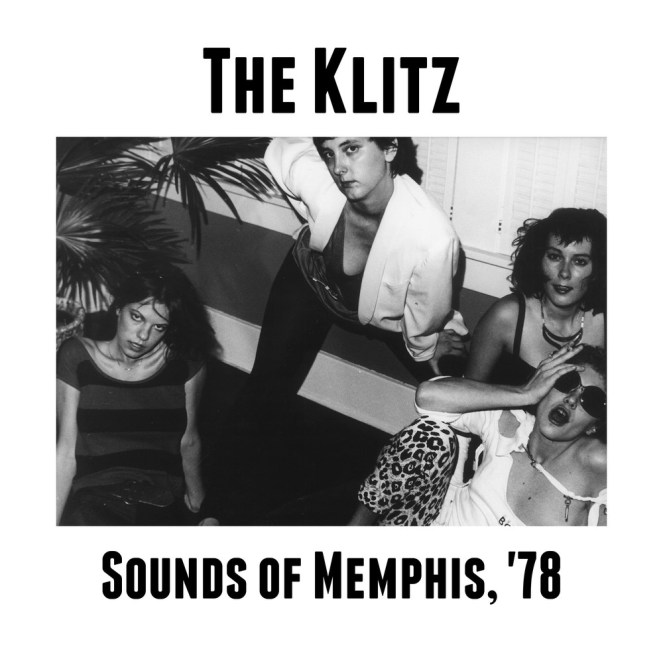
THE KLITZ – “Sounds of Memphis ‘78” 7”EP
If you thought the KBD Santa had
finished blitzing his way into your record collection, think again – this archival
1978 four-song single is way-excellent falling-apart primitive punk, from an
all-female crew who were purportedly “Memphis punk ground zero”. Guitarist Lesa
Aldridge dated Alex Chilton not long before she helped assemble THE KLITZ, and
she looms large in Big Star mythology as the full-blown inspiration behind
“Third”.
Yet I give the nod for most inspired performances on this one to
scratchy-throated singer Gail Elise Clifton, who struggles through her whoops
and yelps like someone working to regain her pipes after a week-long social
bender, and drummer Marcia Clifton, whose rhythmic I-think-I-can tippy-tap beats are perfect for the songs’ beautifully
ramshackle construction. The band’s loose version of Chilton’s already loose “Hook or Crook” isn’t even
the highlight; the whole’s thing’s a wonderful hot mess, and one of my favorite
unearthed treasures in some time.
(Space Case;
spacecaserecords.com) – Jay
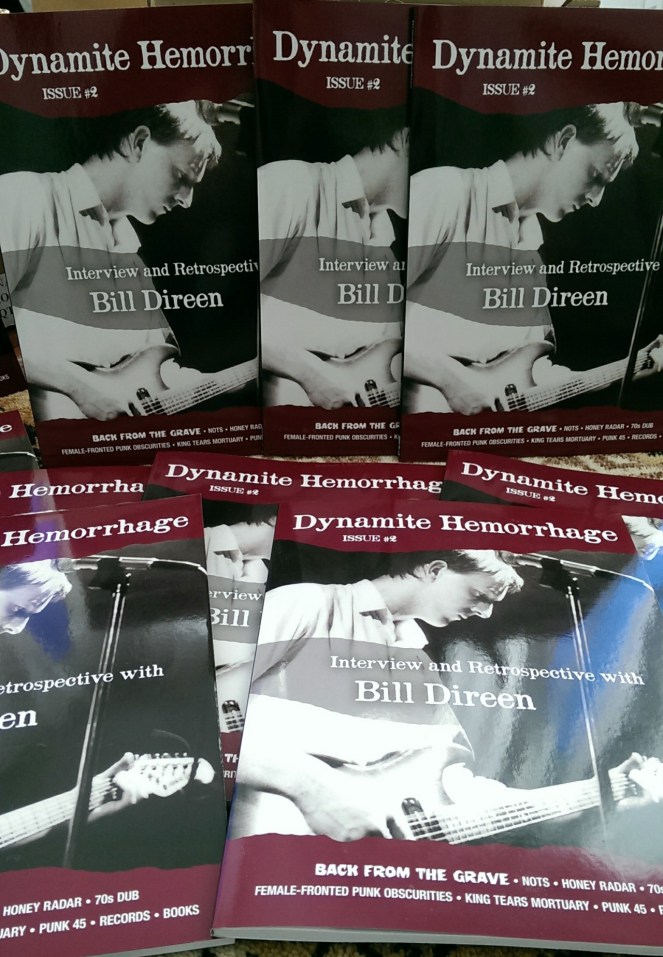
Now available, in case we hadn’t reached you before – DYNAMITE HEMORRHAGE #2. It’s an 84-page fanzine and you can order it here.
It features:
– An interview and career-spanning retrospective with BILL DIREEN, the New Zealand-based musical iconoclast and creator of some of the
most weird and wonderful underground pop music of the last 35 years.
Great old photos of Vacuum, Six Impossible Things and more – with
Direen’s take on his many recordings, bands and general outlook on
creation & creativity.
– Tim Warren from Crypt Records, on the eve of two new volumes of the mind-destroying “BACK FROM THE GRAVE”
60s punk compilations, takes us through in profanity-strewn detail how
he’s been putting these comps together since 1983, and the pain the man
has endured to make sure you and I get to hear some of the most raw and
rare rocknroll chaos of all time…!
– Interview with bedroom lo-fi pop savants HONEY RADAR, currently making many short, abrasive and lovely mini-masterpieces out of Philadelphia
– Interview with NOTS, raw and slashing earworm punk band from Memphis
– KING TEARS MORTUARY, Sydney, Australia’s answer to the question “What would a mix of C86, KBD punk and The Gories sound like?”
– Erika Elizabeth’s overview of lost and neglected female-fronted punk and post-punk bands and records you’ve never heard of
– The Layman’s Guide to 1970s Jamaican DUB
– an overview of wild, weird and wacked dub reggae created during its
peak era, along with ten essential dub recordings, explored
– Interviews with Jon Savage and Stuart Baker on the new PUNK 45 series of archival 70s punk reissues
– 87 record reviews
– 15 book reviews
– Advertisements from today’s top hitmaking labels
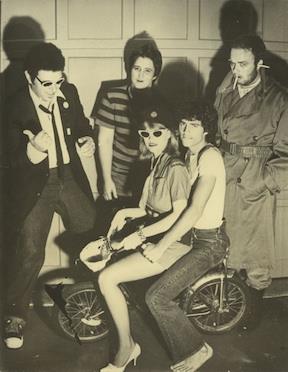
The February edition of Erika Elizabeth’s Expressway To Yr Skull podcast is now available & ready for download.
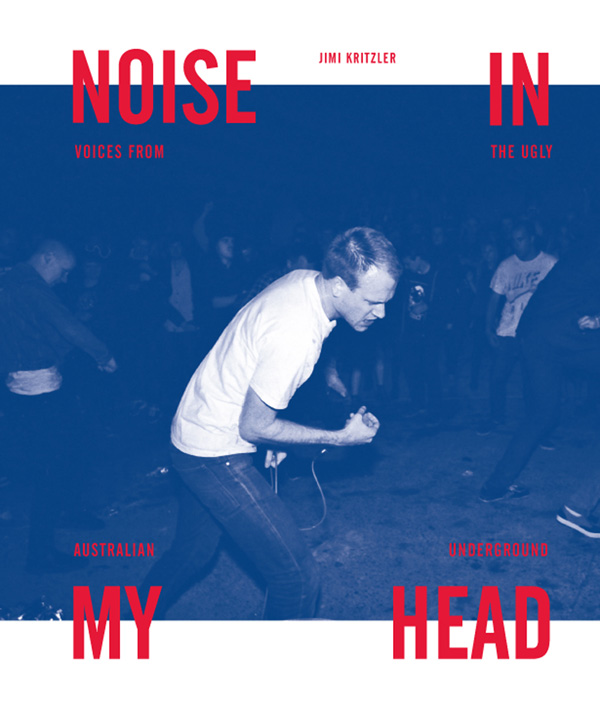
“NOISE IN MY HEAD” VOICES FROM THE UGLY AUSTRALIAN UNDERGROUND” by Jimi Kritzler
Made my way through this recent book by Jimi Kritzler recently, and it was like reading a stack of fanzines on a hungover Sunday afternoon. I barely know the bands covered – well, that’s not entirely true – but that’s also true of most of the ephemeral and short-lived combos covered in the fanzines of yore. Kritzler’s aim here is to take a snapshot in time, the time being roughly now (or at least 1-2 years ago), of the more brutish and punk/skronk/thug and/or experimental bands down under, with a few pop practitioners included simply because Kritzler either likes or knows them.
The formula is repetitive but comfortable. Intro, interview, finished. “Noises In My Head” does this upwards of twentysomething times, to bands both known (Eddy Current Supression Ring, Total Control), unknown to me (most of ‘em) and loved (again, by me: The Garbage and The Flowers, Fabulous Diamonds). Here’s what I learned: drugs are freely available and consumed in rocknroll circles in Australia, and just as when I was in my 20s, talked about in far greater proportion to how interesting they actually are to the reader. Drugs drugs drugs, overdoses, mental illness, fallen comrades (to drugs), etc. Seems as though drug celebrations didn’t cease in underground Aussie rocknroll the moment Nick Cave left the island.
All funnin’ aside, I learned that Kritzler’s got a good ear to the ground in his homeland, and is definitely one of those man-about-town gadflys who seemingly knows everyone & is excellent at connecting the dots between bands, scenes and sub-genres. He writes well and with passion. There are a few grunters in this book whom I’ll need to follow up on. Hey, he missed just about every favorite rock band I personally have down there, from Constant Mongrel to King Tears Mortuary to The Clits, but that’s why it’s his fanzine-cum-book, not mine. It’s a hefty tome, skimmable when it needs to be but also full of good musical ore to be mined. The folks who live and breath in these Melbourne-, Sydney-, Brisbane-, etc.-based scenes will have something very well-done to show their progeny somewhere down the line.
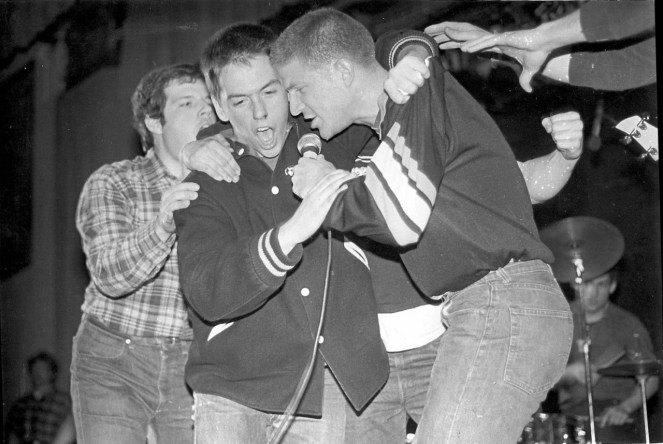
Since we just listened to the Gerard Cosloy/Boston ‘core episode of the “Turned Out A Punk” podcast, we were reminded of this 2004 e-interview we did on our Agony Shorthand blog with Clint Conley of Mission of Burma about Boston hardcore.
Why did I think of asking him these questions? I’m truly not sure, but I knew they’d been fans of hardcore at the time & I thought it’d make for a nice, short piece. Short it definitely was.
AGONY SHORTHAND TALKS TO CLINT CONLEY ABOUT BOSTON HARDCORE!
This small chat with MISSION OF BURMA’s Clint Conley took place a few weeks ago in cyberspace, and was slated to be part of another online magazine’s since-revamped Burma tribute next month. My proposed angle for my piece was a handful of questions on Mission of Burma’s proximity to the 1981-83 Boston hardcore scene of SS DECONTROL, DEEP WOUND etc. – thinking that they had played on some of those bills, I reckoned that there might be some rich stories of fistfights, stagedive mishaps and having to play songs like “Trem Two” a zillion MPH to keep from being murdered onstage by a pack of angry baldies. You be the judge! :
Agony Shorthand: Mission of Burma’s first round of recordings and bulk of gigging happened during a time (1981-83) when Boston was well-known, at least in underground rock circles, for a particularly aggressive brand of hardcore punk. To what extent, if at all, were Burma influenced by this sound?
Clint Conley: Hardcore was certainly a force. We dug the energy and speed and audience ‘participation’. I’d have to say though, the bands we really dug the most were mostly from out of town – Flag, Minor Threat. We played with Black Flag at the Peppermint Lounge in NY on their first gig in NY. They completely killed us – we loved it, our minds were blown. Did we start playing faster? It’s possible.
Agony Shorthand: You mentioned in a previous interview that, “We did play with some of the hardcore bands, but the whole hardcore scene hadn’t hardened into a rigid thing yet, it was just craziness. Crazy guitars – that was our language. These guys were just doing it twice as fast”. Can you say anything more about the similarities?
Clint Conley: Burma always leaned in the direction of hi-speed confusion, and that aspect of hard core was a total rush. Later the hard core scene became more regimented and codified. It’s the old story – an initial burst of anarchic freedom turns into small-minded intolerance w/ a list of do’s and don’ts.
Agony Shorthand: Were there any standouts for you in Boston’s hardcore days, and was there any affinity between you guys and those bands?
Clint Conley: I loved the first Jerry’s Kids album – played it a ton. But I didn’t know any of those guys. I suppose we knew Springa from SSD best on a personal level. They had a massive guitar sound that was completely frightening, and his ‘little big man’ voice added a hard-core cartoon element that was entertaining.
Agony Shorthand: There must be at least one good story of Mission of Burma on stage, confronted with a boatload of angry hardcore kids who couldn’t wait for you to leave the stage.
Clint Conley: The gig that stands out was in Hollywood, playing with the Kennedys and Circle Jerks in ’82. Us thin-skinned art-weenies from Boston got a rather hostile response. No applause after songs, just yelling and spitting. Maybe they were trying to show affection? I don’t think so. It was somewhat intimidating, but much more interesting than the typical non-response of many of our gigs for ‘new wave’ audiences. Offstage, Jello offered his condolences: ‘not exactly the most open minded crowd, eh?’
Agony Shorthand: Similarly, were there times when you were able to win over what might have looked to be a hostile crowd there to see, say, SS Decontrol or Negative FX?
Clint Conley: We never really played with the Boston hard core bands, that I can remember – except on our last gig we asked Neg FX to open. They played a completely chaotic 10 min. set that ended with the stage jammed with kids and cops. Fun. But in general when we played in Boston there wasn’t enough hostility.
Agony Shorthand: What was a typical bill for you to be placed on in the band’s early days, and how do you contrast that with what I assume is the band’s current ability to pick and choose who you play with?
Clint Conley: We were often selected to open for the latest Brit band – Go4, the Cure, Psych Furs, etc. The club owners musta thought we sounded Limey. It was cool – we made some friends, and they’d sometimes ask us to play with them in NY and other places.
 AGONY SHORTHAND