“…yes, you really do want to ride their crazy groove train.”
SUPERDOPE #2 Summer 1991 (page 34)
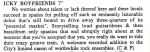
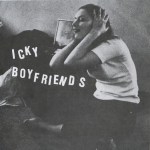
ICKY BOYFRIENDS review by JAY HINMAN, Editor
- Jay Hinman working in Century 21: Dynamite Hemorrhage #2 (2015) and at dynamitehemorrhage
“…yes, you really do want to ride their crazy groove train.”
SUPERDOPE #2 Summer 1991 (page 34)
ICKY BOYFRIENDS review by JAY HINMAN, Editor
- Jay Hinman working in Century 21: Dynamite Hemorrhage #2 (2015) and at dynamitehemorrhage
(Originally written on my Agony Shorthand blog back in 2005 as a review/celebration of 45 Grave’s posthumous “Autopsy” LP)
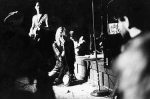
There
was a brief period in my life, quite early in my punk fandom, when I
declared to the world that the greatest 45 in the history of punk rock
was this band’s “Black Cross / Wax”. I once stumbled onto college
radio three sheets to the wind and pronounced it so, and proceeded to
emit a ghoulish, gurgling on-mic scream along with Dinah Cancer during
“Black Cross”’s crucial break. Only after years of ridicule and
subsequent therapy can I make my fragile peace with that godforsaken
evening.
I bring this up because I’ve seen very few fans hold
this band up for much of anything in the intervening years, except as
one of many cool early 80s bands trolling for gigs in Los Angeles during
a period in which there were plenty. Goths haven’t really fully
embraced them, least not last time I checked, given 45 GRAVE’s
– or at least this album’s – fast, screeching, near-hardcore tempos.
These tempos and the sheer power & speed of the delivery on this
fine record mitigate a whole host of problems, not the least of which is
the lyrics and all the bat/cave/crucifix/coffin tomfoolery they were
peddling.
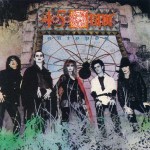
When “Autopsy”
came out posthumously in 1987, a lot of us were truly floored, because
outside of “Black Cross” we’d never heard 45 Grave play so fast. They’d made ther mark up to that time with an awful dirgy metal tune called “Party Time” that was on the “Return of the Living Dead” soundtrack, a film soundtrack notable to me in high school because, like “Repo Man”, it had PUNK on it!!!
But “Party Time” blew, as did the majority of the band’s only official LP, “Sleep In Safety”. What I didn’t know until In The Red put out that fantastic CONSUMERS
LP was that the early 45 Grave were a direct outgrowth of that blazing
Phoenix punk band’s 1977 recordings, and that the “Autopsy” recordings
were 45 Grave at their very earliest, ripping it up in fine
full-fidelity style like THE MISFITS and THE BAGS. Since
they featured not only Paul Cutler from The Consumers but Don Bolles
from The Germs & Rob Ritter from The Bags, the tear-it-up pedigree
was highly refined & practiced in the legend-making punk rock dark
arts. And Cutler was bold enough to swipe most of his best songs from
The Consumers, and then re-record them with a female singer & his
hot new band = 45 Grave.
Granted, the horror BS was/is a
little much, but like The Misfits, it was a gimmick that could mostly be
shunted aside if you pretended you’d recently had a partial lobotomy.
Only “Dinah Cancer”’s banshee vocals and some select atrocious lyrics
still make my skin crawl, now that I’ve mentally removed my frontal
lobes. This collection nets you that wild-ass “Black Cross” 45,
certainly one of the top 197 punk 45s of all time, a large batch of
90-second howlers, the novelty “Monster Mash”-like “Riboflavin Flavored,
Non-Carbonated, Polyunsaturated Blood” and even an early “Partytime”
that almost doesn’t suck.
I wasn’t even sure this even made
it out to CD until I read that it’s one of the rarest CDs going, selling
on eBay for $268. Now how do you figure that? I busted the LP out last
week and gave it a full-bosom nostalgia listen, and I can say that the
center still held. Check your local auction listings and keep that
wallet stuffed!
(Originally written in 2006 on my Agony Shorthand blog)
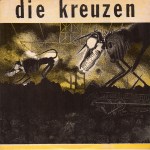
A couple of years ago I made a list, as I so often do, of the hallmarks of early 80s American hardcore punk rock. #1 with a bullet was the debut LP from Milwaukee’s DIE KREUZEN. I said something along the lines of:
Simply put, this is just the fiercest, most punishing record I’ve ever heard. If that sort of bluntness piques your interest, then the debut LP from Milwaukee’s finest is made for you. It makes God weep, Motorhead tremble and Danzig look like a mincing little pansy. In other words, it’s ballistic blast after blast of savage screams and guitars pushed into the bleed zone, and it transcends superficial ear-shredding with massive riffs and chops that move by at lightning speed. When it came out people were dumbfounded. Tim Y at otherwise poor tastemakers Maximum Rock and Roll wrote a review that was the words “This is fucking great! This is fucking great!” repeated over and over. It’s just that kind of record, barely connected to the art-metal they pursued just one album later.
I stand by that description and then some, with the exception of "barely connected to the art-metal they pursued just one album later”, as that’s almost certainly exaggerating to make a point. “Die Kreuzen”, the album, is unlike any other HC record ever. It scrapes the edges of light-blur metal and jagged, weirdo post-punk night sounds to come up with a wholly singular & incredible record. You know, it actually came about a little late in the hardcore lifecycle – 1984 to be exact – and I’ve never felt it’s received its due for being as shredding as it is.
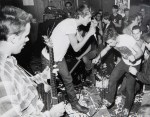
Consider the vocals. Dan Kubinski’s raw, throaty near-falsetto was multitracked and amplified such that he sounds like a screaming, lunatic creature of some kind, totally in keeping with the LP’s bizarro futuristic cover art. You might call it “heavy metal singing”, but that’s wildly off the mark to my ears. Guitars straddle the border between sci-fi art sounds and straight-up ripping hardcore, and that’s something they carried through to the next album (“October File”) as well, albeit with a totally different production style. I reckon that for many a hardcore punk partisan, that strangeness might have been a bit too much to take. Most importantly, if you can handle how jarring this entire record is, you will find that is absolutely impossible to play it at anything but maximum volume. Thus it’s perfect for a window-rattling solo car ride or for an evening when everyone else is out of the house & you need to let out some of your pent-up shit. I call it a masterpiece, and one of my Top 20 favorite records ever.
PS – I suppose it would help to mention that you can find this album on Touch & Go’s CD of “October File”. It is illogically sequenced after their 2nd album, and starts in around Track #15.
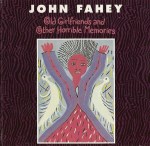
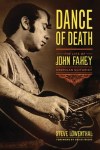
“John Fahey is an incorrigible person – absolutely amazing, completely inventive, but one of those souls whose propensity it is to fail.”
LESLIE GAFFNEY, Publisher & Boss
POPWATCH #4 1993 (page 71)
- Superdope and dynamitehemorrhage writer Jay Hinman wrote this about Dance Of Death at Goodreads: “Fahey’s been ripe for a book-length deconstruction even long before his 2001 death, but it’s truly the swelling cult of worship around his dazzling four decades of guitar work that’s propelled enough interest to warrant it. Steve Lowenthal, a writer and record label head, does an admirable job at relaying the complexities and alternately misanthropic and large-hearted character of the man, keeping his biography rooted more in name/date/order facts, and in quotes from Fahey’s ex-associates and –wives, than in conjecture or analysis. One comes away with even more appreciation for just how creatively out of step Fahey was with his times, and how he was deeply sub-underground & “alternative” well before the terms had even been used in relation to music, or humanity. Lowenthal takes the biography chronologically, starting with childhood life in Takoma Park, Maryland and ending with Fahey’s late-in-life existential conversion to the course of free noise & radical experimentation (much of which, it’s made clear, was quite likely the burden of age and declining health, and not being able to pluck & play acoustically any longer). We get some good detail on Fahey’s discovery of Charley Patton and the blues; his record-collecting and canvassing in the Deep South with Dick Spotswood, Joe Bussard and other collecting luminaries; and how he sort of fell in to being a guitar virtuoso and a creator of some of the most incredible, symphonic and detailed guitar ever created. In between we see how Fahey’s pranksterism, introversion, abuse of alcohol and pills, and his abundant willingness to talk down to his audience both built his mystique and throttled many aspects of his career. Though I’ve never liked even a smidgeon of the post-rebirth, late 90s noise/improv Fahey (it’s clear that Lowenthal thinks it’s crap as well), the last few chapters detailing his belated connections to the American indie underground are outstanding. His hatred of the hippies and of the 70s shorthand that connected his instrumental guitar playing with “new age” music comes full circle, in which he finally finds a group of weirdos on the margins of music who are very like him. Yet his sloth, unpredictability and many flights of bizarre fancy are even too much for many of them, and there are some great (if a bit tragic) anecdotes from folks in his later-years orbit about just how uniquely bullheaded this guy was. Fahey was the late-20th century manifestation of the absinthe-guzzling creative iconoclasts of previous centuries, and his outsized contributions to the arts exist on a timeline that stretches back still further. Lowenthal did a fine job at documenting it, and leaves room for a more critical and contextual examination of Fahey’s work for someone else to tackle.”
- Speaking of Jay Hinman and books, he just published yet another zine [May 2015], this one exclusively devoted to…books! Hedonist Jive Book Review: “…Debut digital-only issue now available for free – featuring an interview with Jodi Angel; a sweeping overview of Rick Perlstein’s non-fiction trilogy on America’s turbulent 1960s and 70s; “The Final Word on E-Readers”, and over 20 book reviews. Read it on Issuu or download the PDF now.”
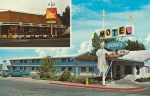
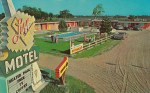
One of the odd passions I have is 1960s motel postcards. To that end, I’ve just resurrected a blog I’d been doing called THE POSTCARD MOTEL, in which I scan and post from my collection. Take a look, and keep it bookmarked if you like this sort of thing.
(Originally posted on my Agony Shorthand blog, January 2005. The best of this stuff has just been reissued on LP in 2015 – more here)
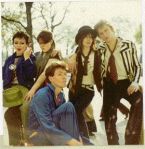
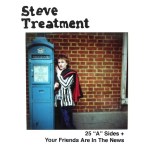
Before I read through the liners on this collection, but after I’d dug in deep to disc #1, the 1977-79 collection “25 A-Sides”, I had STEVE TREATMENT nailed as a massive Marc Bolan fan. Rollicking, strut-heavy glam chops abound on Treatment’s early 45s, but instead of being a full-on electric warrior tribute act, his act was seared with the raw knowledge of 1977 punk rock.
Turns out that he and his punker pals were indeed huge Marc Bolan/T.Rex worshippers, and spent the better part of the glam era hanging out closely with the man himself. When punk arrived on England’s shores, Steve Treatment and his Bolan buddies Nikki Sudden & Epic Soundtracks gently convinced Marc into bringing THE DAMNED along on tour, which may have been the one gesture that kept Bolan’s credibility alive with the sneering punk crowd a few months beyond its natural shelf life. Punk also meant that Treatment and his friends were now free to throw their own musical ideas onto wax; thus were born the legend-producing SWELL MAPS, and the dustbin-of-history- relegated STEVE TREATMENT.
For a few months, these acts actually were one and the same. On Steve Treatment’s debut EP “5 A-Sides”, the entire band that we now know as the Swell Maps were the key players. This record is incredible, and hearing the four tracks beyond “Danger Zone” (which was on an early “Messthetics” compilation) is one of the early musical highlights of 2005 for me. I’ll put them all up on a par with the Swell Maps’ “Dresden Style”, “Real Shocks” and “Read About Seymour” – all are just as spastic and aggro, and like the Maps, none of them fit into the “punk” bucket as popularly defined. Treatment then played a bit part on some of their early records. Seems like the Swell Maps, in getting a decent record deal and some radio airtime for their 45s, were able to propel their subsequent legend forward a bit, but I can’t figure out why the excellent Steve Treatment EP didn’t give him the same kind of push.
Yet Steve Treatment had a fine rock career well beyond this initial blast of sound. “25 A-Sides” collects his next couple singles as well, in addition to unreleased material recorded at the very end of the 1970s. Most tracks are in the same vein as the first single – very raw, very homemade-sounding, very British experimental glam rock. Treatment had no quarrel with overlaying a truckload of effects, echoes and delay on just about everything he did, so it all sounds as if it was recorded in a huge empty warehouse on unmistakably cheap equipment.
The first CD breaks down about halfway through and starts to recycle some of the earlier tracks, but if you’re a Steve Treatment completist then you’ll be a happy guy. The second disc, “Your Friends Are In The News”, collects multiple recordings of his from the latter two decades, still well aligned with the DIY spirit and virtually as raw and unkempt. Like “new wave” never happened! Just not as exciting. But your life is short, right? And you’ve got a lot of music you need to listen to, am I correct? You therefore won’t need to spend much time with this one, but I wouldn’t miss out on this package overall if it means you’re never going to hear those first couple Steve Treatment singles.
“…as tasty as an AM/PM cheeseburger!”
YAK’UZ’Å, #6 1994 (page 56)
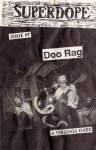
SUPERDOPE #7 review by DAVE MCGURGAN, Editor/Publisher
This edition of Superdope, which I put out in ‘94, is all gone – but its follow-up issue (#8) from 1998 is still very much available here.
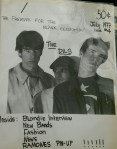
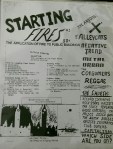
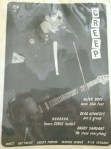
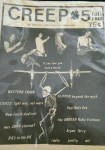
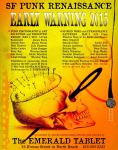
I went to the “San Francisco Punk Renaissance” photo and ‘zine show this past Friday, and saw a bunch of wild photos of Crime, Screamers, Nuns, Flipper etc., many of which had never been seen before.
There was also a table of fanzines in sleeves, including some known reads like Damage, Ripper and Search & Destroy, but then a whole host of very cool obscurities like the ones I took pictures of here. We were even allowed to pop ‘em out of the sleeves and look at them a little. Fantastic stuff.
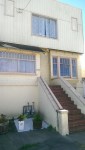
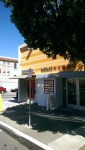
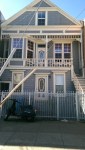
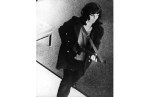
Some photos taken today of the actual sites where all the Patty Hearst action went down in 1970s San Francisco. (except for the last one, which is “Tania” robbing the former bank in picture #2).
625 Morse Street = the Symbionese Liberation Army safe house where she was arrested in 1975.
The NEMS site is the former Hibernia bank she helped rob as “Tania”.
288 Precita = the SLA safe house of Bill & Emily Harris, where they were arrested.
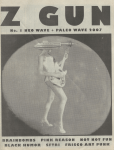
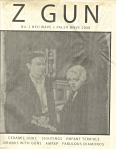
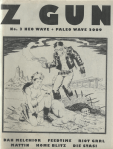
The first decade of the 21st century was not particularly known for its print fanzines, for reasons that should be obvious.
A phenomenal exception was Z GUN, published out of Sacramento, CA by Scott Soriano and Ryan Wells. 3 issues in total, one per year from 2007-2009. Garage, art, punk and noise, along with detours into international/global musics, think pieces and dozens upon dozens of records reviews.
Here are the covers for all three.
 AGONY SHORTHAND