interviews

Hisham Mayet and Bulbous Monocle Records – a Q&A

I’m a strong enthusiast and supporter of Hisham Mayet and his Bulbous Monocle label’s efforts to excavate, illuminate and re-introduce to the world the odd and offbeat San Francisco musical underground of the late 1980s and 1990s. Starting with a quartet of out-of-print or otherwise uncollected Thinking Fellers Union Local 282 records, Bulbous Monocle has some big plans and a set of aesthetic interests that are pretty goddamn compelling.

I took the time to talk with label proprietor Mayet – who already runs Sublime Frequencies and a couple of other spin-off imprints – about the label, his “journey” and a few other items of interest during the summer of 2024:

Dynamite Hemorrhage: Let’s start with an Executive Summary question and have you give us the overview of Bulbous Monocle – what it is, why you started it, and what you’re trying to capture with this label.

Hisham Mayet: I guess several years ago, sometime pre-pandemic here in Portland, Mark Davies (Thinking Fellers Union Local 282) had become a close friend. Over the years I’d certainly met Mark, probably during the tail end of my time in San Francisco, and I definitely got to know him a little bit better post-that. Once I moved to Portland in 2009, I got to really know all those guys, really. It was a matter of all of us sort of moving to Portland around the same time, give or take a few years. I think Mark and Kate, his wife, moved up here a little earlier than Brandan (Kearney; World of Pooh and Nuf Sed records), who moved in about a year before I did.

We all had common friends, obviously, from the centrifuge of Sun City Girls and Mark Gergis. That whole sort of post-SF scene. We found a bunch of us ended up in Portland, either from San Francisco or down from Seattle, whatever, and got to be close, I don’t know; drinking buddies, dinner parties, hangout sessions, etc. We were one day just shooting the shit, I think, at a bar or something, and I was like, “Hey, man – what’s going on? The Thinking Fellers archive….?” I think I’d done some snooping around the Internet and discovered that everything was out of print for sure. There’d been no activity. The last time there was anything of significance from that band was a reunion show back in 2010 or 2011 or 2012. There was this festival in the UK called All Tomorrow’s Parties. That one was curated by Animal Collective, and they had invited Thinking Fellers to play. It was a host of real famous names, it was wonderful; Rick and Alan Bishop as the Brothers Unconnected duo; Sublime Frequencies DJ’s, and host of others: Terry Riley, The Frogs, Meat Puppets. Fuck. It was insane.

Beyond that, there had just been crickets. I was just telling Mark that “it’s a real shame that no one’s really talking too much about the Fellers anymore, and what are you planning on doing?” He just sort of shrugged his shoulders and just said, well, no one’s really talking about it in the band, or anything like that. So I convinced him to start up a Bandcamp page for the group. I said, this Bandcamp thing is helping a lot of people, and you may want to consider putting up the catalog, at least so a new generation of people could hear it. He did, and I think it did well enough to fluff up the legacy to a certain degree. 

Then, a couple of years later, we started discussing potential vinyl reissues. It wasn’t that I was trying to do the vinyl reissues myself. I was trying to think of other labels that could do it much better justice. I thought about Superior Viaduct or Drag City, or somebody like that that had the infrastructure in place that could do it justice. I reached out to a couple of people, and honestly, I got no pulse back, and whether these people were too busy – I doubt they were uninterested, but maybe that they weren’t thinking about it. I thought to myself, well, I know how to run a record label. I’ve got 3 or 4 cooking right now. I think I could do this. I just sort of took a gamble and said, fuck it. I’ll do it.

The initial focus was just to deal with the Thinking Fellers. In the course of the conversation I thought to myself, well, if we’re gonna go there, let’s see if we can’t deal with the extended family. Bring in all the characters. If the Thinking Fellers were the mothership, all the little babies could get scooped up to and try to get dealt with.

Thinking Fellers Union Local 282 (photo: Gail Butensky)

DH: You’re right, they really were the mothership, with many babies circling. 

HM: Mark was like, well, you do whatever you want. This is your label and I’m happy to offer you all the Fellers material you need.

DH: I should probably know this, but what does the label’s name refer to?

HM: Oh, that was some nonsensical dada word play between me, Davies and Kearney. I was trying to come up with a name, and I’d reached out to those guys. We all have had this email thread for years where we email stupid shit to each other; dumb jokes and links, that sort of thing. And we all started riffing. Of course, Brandan emails me 75 nonsensical names, you know;  “Pudding Lane” and this, that and the other, and Davies the same, and me the same. I just chose two words that seem to go together well, honestly, without any sort of focus about it. It was just like, Oh, here’s bulbous and monocle, and those two sound good together, and that was it. Zero intellectual depth to it whatsoever. Brandan made fun of me for a second; he goes. “That sounds really Wes Anderson”, and I almost barfed. Please dear Lord, don’t compare me to that.

DH: Tell me a little bit about your time in San Francisco. When did you move there, and, knowing how music-obsessed you were, where did you go and who did you see your first year or so there? What impressed you the most?

HM: My time in the Bay Area was in stages. I first moved out there in the late eighties, when I went to school at Cabrillo College in Aptos, just south of Santa Cruz. I went out to San Francisco in 1987 for the first time when I was 17 years old and growing up in Pensacola, FL. My parents let me go on a walkabout at that early age. I hit the road with my best friend at the time, and we drove cross-country and hit LA, and then drove up the coast, and ended up at San Francisco, the place with all this crazy music that I’d loved at that time, coming from hardcore and post-punk.

I dove head-deep into psychedelic music of the sixties at that age. I was into you name it; whatever late sixties psychedelia. San Francisco was mythical in my mind for being this sort of Eden of bohemian psychedelia, and I fell in love, of course. I mean just the whole of the West Coast, seeing that for the first time at that age really inspired me to just basically be like, I’m moving here next, the day after graduating high school, which is basically what I did. I packed everything up and moved out right after my senior year of high school and managed to land in Santa Cruz. A bunch of my friends were in San Jose. There were a bunch of us that all moved out together, so we had a small clique out there, we had all gone to high school together.

That was ‘88, ‘89, ‘90 and then I moved away. In 1990 I moved back to Florida for a couple of years, then came back out to San Francisco, for, like not even a year, then moved to Houston, Texas, in the early nineties, ‘92 to like ‘95;  then also in that time period went back out to San Francisco for a few months, and then came back to Houston, and then came back to San Francisco full-time around 1995.

DH: I’m gonna assume that was work-related, or was that school-related?

HM: It was completely unhinged, no direction in my life, just trying to figure stuff out. And you know, friends here, friends there, I just finished college around that time, too, and I always knew I would be back in San Francisco, but there was kind of a period that I had to sort of put in time back where I’d grown up, before I could head back out fully-formed as a quote-unquote “adult” at age 24.

DH: So you’re really living there in fits and starts, right? There’s no sort of like one period where you landed, you stayed, and then you left 15 years later, or whatever.

HM: I did spend the latter half of the nineties there fully immersed. I lived in Noe Valley. I was two blocks away from Aquarius Records, before they moved down to the Mission. Then I ended up moving. I was living in Ingleside over there by City College for a few years as well.

DH: What was your musical experience there like? You said it was kind of you were looking for Eden, and something that was kind of like a holdover from the psychedelic sixties and the hippies. Did you find that when you were there, even in 1987? Or did you find something else entirely?

HM: it was a mishmash of stuff. Early on in my years in Santa Cruz, and even when I’d go back for those short visits, I was all over the place, man. We’d see music from whatever was available. I mean, the Santa Cruz years were definitely dominated by the Camper Van Beethoven world. You know, they were the locals. They were the bigwigs in town, so they would play a lot like at The Catalyst and other venues, and Monks of Doom, and The Ophelias, that sort of Camper universe ruled the roost, at least in Santa Cruz.

We would go up and see some shows at the I-Beam, but I was a young man, I wasn’t even 21, so there were a lot of clubs we couldn’t even get into. We had fake IDs at a certain point, to try to go see some of the bigger shows. A lot of times we wouldn’t be able to get in so we would see what we could see locally; there would be bigger festival stuff. And man, my memory. Honestly, I feel bad, but, like the details are….there were a lot of psychedelics involved at that time, and a lot of pretty heavy substance abuse.

DH: You’re definitely reminding me as well of the 21-and-over conundrum that I think San Francisco had a lot more issues with. I’m a couple of years older than you are. But in LA – I went to school down in Southern California –  the clubs were 18 and over: Raji’s and the Anti-Club, which were the two main clubs there. You could hide your drinking surreptitiously. I guess by the time I actually made it to San Francisco I both had a fake ID, and/or I was already 21, so it wasn’t an issue.

HM: That limited the live experience a bit, and I literally had no money, so I wasn’t even collecting records. It was hand to mouth, and buying records was an insane luxury. I mean, we were barely surviving with just food and beer. That whole record collecting thing didn’t really start up again after high school until I’d moved to Houston.

By the time I got to San Francisco I was a full-bore record fiend, and it was a great time because that was the era when people were dumping tons of vinyl at every place that you know: Amoeba, Grooves, Flat Plastic Sound, Reckless. Rough Trade was even still around, I think.

DH: Yeah. They went South of Market for a while.

HM: That’s the one I remember, yep.

DH: What were some of your impressions, just either of the city itself, writ large, or the “state of the scene” when you were in San Francisco during those various years? With regard to underground rock music, what made the sound there interesting to you at the time, and did you feel that people were kind of recognizing it outside of town? I’d just love to get your takes on your sort of intermittent bursts within the city.

HM: Once I got back there, there was kind of this nostalgia revival in my mind of, “oh, I’m finally back, and I’m gonna like fucking never leave”. With regards to the scene itself, I mean, I wasn’t necessarily part of, or even deep friends with a lot of these folks. It would take at least three years for me to kind of start to meet a lot of these people, be it Gergis and his gang in the East Bay, and the Fellers, or whatever, and I mean, my contacts were all within the neighborhood where I lived in San Francisco. I was seeking out all the freaks that were into the Sun City Girls. That was a huge focal point for me, and from there was meeting one person after another, which introduced you to another. I wasn’t that connected, or a musician; I wasn’t on the inside at that point. I think a lot of people that were friends of mine now had probably left around that time, anyway, mid- to late nineties.

Caroliner

You were asking about some of the shows that had blown my mind back then. I remember seeing The Oblivians at the Kilowatt was a mind-blow for me. I think that was ‘95 or ‘96. Ghost, the Japanese band, came and played the same venue. Some of the bigger shows that would come through town at the Fillmore or the Great American. It was the Matador era, so Dirty Three or Sonic Youth, or you’d see a weird, odd show in Fruitvale (Oakland) with Caroliner playing some weird-ass loft. We’d get off the BART, and get egged out in fucking Fruitvale for just being on the street, and not being from the neighborhoods – it would all seem kind of dangerous. 

The Fellers played a couple of shows out in Oakland; there was kind of a venue theater spot. A lot of stuff went down there; this would have been late nineties.

DH: In the early 90s they played the Heinz Club a few times in Oakland. It was kind of a short-lived, maybe a 2-years-at-best club, where a lot of really interesting bands would play.

HM: Yeah, that was Lexa’s joint, I guess, and I never got to see anything at the Heinz Club; I wasn’t around at that point. But a lot of all the friends that I know were; you know, Gergis and Pete.

DH: Oh, yeah, absolutely. Your “scene” was ever-present there, I think that that’s pretty much who was there.

HM: Right, right. And man, I mean speaking of – like I don’t know if you know Peter Conheim or not or know of him….

DH: Is it the same Peter from Oakland that worked at Saturn Records?

HM: Did he work on Saturn? I’m not sure. He was in Negativland recently. He was in Monopause, and I think also in Fibulator. He’s kind of the archivist, I mean – Peter was the guy that was filming and recording everything from that era. He’s the one with the massive audio and video archives from probably 1990 on up, and we’re gonna be utilizing a lot of this.

DH: What’s he doing with it? I was probably at some of those shows. What is he putting out – or is it already sitting on YouTube somewhere, or no?

HM: We’re not really sure. I mean, there’s stuff that’s been buried for years. He actually just bought the old Fantasy Studios.

DH: In Berkeley?

HM: Yeah. Him and a partner, and they’re revamping that. I mean, he’s been helping with a lot of tape restoration for these Fellers reissues. You know, baking tapes and doing a pre-master. And then Gergis has been remastering. So he’s being utilized in that sense, but he’s also gonna be helping, I think, in the future, cobbling together whatever disparate bands or one-offs that we would be able to make comps out of. He’ll be the best source for a lot of that stuff, he’s definitely got the archival goods. 

DH: The Thinking Fellers material you’ve brought out to date has focused – except for the singles etc. comp – on 1993 material and afterward. At the time, I saw that year in particular as a somewhat clear dividing line for the band from what they’d been before: willing to write “pretty” songs; willing to clean up their sound in parts; but still willing to put utter absurdities on their records for no good reason. How did you see their evolution at the time?

HM: Well, the first thing I heard was Lovelyville. That was the first thing that I bought and I saw them on what I think was the Admonishing The Bishops tour, and I saw them again around the time of Strangers From The Universe. But that was in Houston, weirdly enough, right before I’d gone out to San Francisco. The reasons I chose what I chose to release first was from a logistical standpoint. You know, the idea to do this was to introduce the band to a new generation. I really wasn’t trying to bring a nostalgia trip back to anyone who had these records. The idea was there’s a whole generation of people that have never really listened to the Thinking Fellers, how would you best be able to introduce this? 

I don’t really ever care about chronology or anything like that. I just went like, what are the most accessible releases that could at least, you know, crack this door open? I wasn’t gonna put out Mother of All Saints and be like, “hey, check out this band, they’re really cool and dense and weird and fucked up and indulgent”. From running a record label, you’ve got to think about these things. You know: what is the thing that’s gonna find the largest audience to at least introduce this? I’m going about it in a completely ad hoc way. The Funeral Pudding is gonna be in town on Tuesday, I’m gonna go pick up my copies. I’m gonna do Tangle after that. So we’re going all the way back to the beginning.

I think I’m gonna keep Lovelyville and Mother of All Saints as maybe the last two releases to do. That’s just how it’s gonna end up. There’s really no rhyme or reason, other than choosing Strangers and Admonishing seemed to make the most sense to me, from a financial standpoint honestly, and as a way to reintroduce or introduce the band to a new audience.

DH: Yeah, you’re bolstering the label so that you can do the Nuf Sed singles comp, right?

HM: Yeah, it’s gonna get weird. And the Whitefronts stuff which we should get to at some point. I’m not gonna put out a Whitefronts album, and then just lose a bunch of money and then be like, “Oh, this sucks! I’m out!”. I had to do enough loss leaders with Sublime Frequencies and several other labels that I’ve done over the last 20 years. 

DH: It’s a good strategy, though. I mean you get to put out what you want, but you’ve sometimes got to think about actually bolstering the strength of the organization, right?

HM: Oh, yeah, I mean, it’s true but those are great records, too. I mean, Strangers From The Universe and so on. 

DH: Absolutely. It was interesting. They actually got significant attention outside of town at that point. They really felt like a local band until then. In fact, I remember when Matador got excited about them and Gerard Cosloy came out, they played a Matador fest in San Francisco, probably around ‘91, and I was like, “Oh, my god! The rest of this country cares about the Thinking Fellers!”. “The rest” being Gerard and a few people in New York. But I was flattered, you know, like, our band, our band is going somewhere. Not that I had anything to do with it. 

So how do you characterize Brandan Kearney’s Nuf Sed Records in the late 80s and through the 1990s? What made this a label worth paying attention to at the time, and how do you think that music will play now, should you put it out again?

HM: Nuf Sed was such a breath of fresh air for me just in regards to the humor, first and foremost. The complete lack of dogma and/or the inside joke-making was the way I understood it, and why I loved it, and I was drawn to it for reasons other than connections to the Sun City Girls and the Fellers. It was kind of a piss-take in the way it presented itself, definitely did not take itself seriously. Lots of humor there, be it ridiculous or dark.

In that sense, it aligned with my own ridiculous sense of humor as well, and taking the piss, which we did a lot of during that time, any sort of movement – I never really felt like I was part of any scene or whatever, and I never really was, because I always felt outside of it, sort of on the balcony, looking down, which is where I felt maybe the most comfortable, and not necessarily aligning myself to any one particular thing or another. I mean, even if I was buying a bunch of records that were coming out on the “in” labels at that time, I was still heavy into collecting, I don’t know, Folkways records, Arabic records, traditional Asian stuff. I was as much or more into that stuff.

I loved the energy of contemporary music and probably like you, Forced Exposure was my bible for sure. At that time, Byron and Jimmy were huge oracles for me, and a lot of the friends that I had also hipped me to some really cool stuff. That was such an intense 3 or 4 years; from ‘92 to ‘95 was such an avalanche for me, in regards to being introduced to whatever was current, but also, like, BYG, ESP, tons of obscure psychedelia. Also Sun Ra, I saw Pharoah Sanders back then. I was already heavy into free jazz. When you finally have disposable income, you’re just buying anything and everything that seems tangential to one or another of the releases. And then that classic era before the Internet, when you had to do a bunch of detective work, through reading liner notes or the credits and thank yous on the back. That was a real university education with regard to what was what.

DH: You’re also either working on or would like to work on a World of Pooh collection at some point. Are you able to say more about what that might have on it?

HM: I talked to Brandan. He nonchalantly shrugged his shoulders and was like, “Sure, whatever, If you think anybody will listen to it”. The World of Pooh comp is now in full throttle and almost done. Just a couple of weeks ago, I really dove back into what he had sent me. It’s basically all their material, even the original cassette, but I don’t think I’m gonna go quite that deep. I think it’s just gonna stick with the Barbara Manning years and tie up all the loose ends: the 7-inches, the comp tracks. Whatever wasn’t on The Land of Thirst.

World of Pooh, 1987 (photo courtesy Brandan Kearney)

DH: I made myself a CD-R of all that stuff probably 25 years ago. And that’s still one of my favorite CDs, with all the loose ends in one place.

HM: It’s hilarious, ‘cause I also just burned it to a CD-R, last week, and then I drove up to Seattle to do this Flea Market record fair, and listened to it all the way up and all the way down.

DH: I’d also love to know as much as you’re willing to share about The Whitefronts, and any involvement you might or might not have in bringing their music to a new generation.

HM: I have that album that they put out, Roast Belief. And I revisited that recently in a weird way. I was talking to someone I’ve seen in Seattle, this would have been a couple of years ago, but Martin Imbach is his name. He runs Georgetown Records. Martin was a big head back in the day in Seattle in the late eighties, or whatever, even mid-eighties, I think. He was talking about seeing them back in the day like, “Yeah, man, now, those guys were really fucking weird. They dressed up in Libyan robes, and were on acid”. And I kept thinking like, “Whoa! It sounds like Sun City Girls”, and he’s like, “they just were like total freaks, and it sounded like the Butthole Surfers”. So I pulled the record back out, and I just was like gobsmacked, because I hadn’t heard it in a long time, and finally, like, it made complete fucking sense to me, and I was just obsessed again, you know?

DH: And that’s what you’re thinking about bringing out again?

HM: No, no, so I’m in touch with one of the members, Skud. I think what we’re gonna do, and it’s pretty much set, is the unreleased second LP that was supposed to come out after Roast Belief. It’s as great as all their stuff. I’ve got a couple of the other cassettes too. Their stuff is just phenomenal. I mean, that’s a band to me that scratches every itch.

The Whitefronts

DH: I went to UC-Santa Barbara, and they were touted by my older cousin and his friends as the one local band that were, you know, “college kids” that were fantastic. Right when I got there in 1985, they were probably petering out and moving to San Francisco so I missed them entirely. But I did get to hear those cassettes; my cousin and I lived together and he would play them in our room. And I was like, this is crazy stuff.

HM: It’s incredible, man, it’s incredible stuff. It’s incredible. I’m really excited to bring that out, because, you know, as you said, mostly just the heads, the local heads. They have a lot of connections with some people that are still living. I don’t know if you know who Lindsey Thrasher is.

DH: Yeah, totally.

HM: Okay, well, you know, Phil Smoot, I think, was part of Vomit Launch for a minute. They dated back in the day. You know. Chas (Nielson, editor of Bananafish) knows them really well, too. Brandan is a huge fan. He has some of those cassettes. At the end of the day, beyond this unreleased album we’ll see what else we can do. But with those guys, they’re all in.

DH: I remember Roast Belief got written about, or just the Whitefronts got written about in Bananafish, and that too felt like huge validation because this local UCSB band all of a sudden is getting attention in this big fanzine. I was really excited for them. That’s the only Whitefronts coverage I ever saw anywhere, I think?

HM: Well, you know I did some detective work and pulled out some old FEs and Byron reviews them, and he was floored, too. He didn’t even really know how to go at it. But the end sentence was like, this is maybe one of the top picks of the issue or something. So we’ll see where that all goes, but for sure that’s gonna also happen, probably right after the World of Pooh release.

DH: Did you read Will York’s Who Cares Anyway book, and if so, what did you think about it – specifically the parts about the music you’re reissuing?

HM: I met Will 20+ plus years ago when he moved to San Francisco, I was touring with the Girls. This was the early 2000s, and we met because he did a big write up for the Bay Guardian at that time. He came out and had dinner with us, pre-show or whatever, and I knew that he was working on this book. I know he’s been at it for a long time, so finally, when it came out – it’s great. I love the book, especially the things that I care about; Flipper, and then the scene that we’re dealing with, be it Caroliner, Turkington, Brandan, and into the Feller zone, which is really the stuff that I most cared about. Some of the other stuff, I wasn’t ever really into. There was a lot of music in the Bay Area that also was for me personally a little cringy, that wasn’t my taste at all. 

It’s well written. It’s an oral account from the horse’s mouth in a lot of ways, you know, which I really appreciated.

DH: That’s the best way to tell a story, I think.

HM: Yeah, agreed, and in that sense he succeeded really well, he let everybody kind of tell their own story. Some of it could be quote-unquote controversial. I think a lot of beefs were revealed, and that were only known about by scene insiders. I’m still curious if Grux has read the book or not.

DH: When did you leave San Francisco, and why?

HM: In 2000, I moved up to Seattle. I moved for whatever reasons you can imagine. The state of San Francisco was pretty intense. You know, the dotcom shit hit the fan. I was married at that time, and things got out of hand living wise. I’m sure they’re 10 times worse now. But all things being relative – at that point, the trajectory had gotten into the red of, like, unaffordability. We were lucky to get in when we did. I mean, our rent was nothing for years, and we had a big house with a yard, and it was a ridiculous amount of rent that we paid. The landlords were really cool, but we couldn’t leave that house because of that. So it felt like a kind of a ghetto prison. Any move would have tripled our expenses.

So I was like, fuck this, we’re out. My wife’s mom was moving up to the Puget Sound, up to Whidbey Island. We moved up to Seattle. At that point, I was already in touch and friends with Alan and a couple of other people up there, and so that made it a little easier to go up there and have friends already living there. That was an easy transition, and it was a glorious one. The ensuing years were quite magical. 

DH: Is there a record you’d like to reissue or put out that you just know won’t or can’t happen for whatever reason?

HM: You know, honestly, and this sounds like a joke – I’ve mentioned this to Grux, who, you know, Grux is not the easiest person to to get a straight answer from – but I’d love to do a Caroliner’s Greatest Hits, and call it that. Caroliner Rainbow’s Greatest Hits, and cull from all the releases. I think people get so intimidated about where to enter. You know this complete maelstrom of prickly noise, but there are some really beautiful moments in there too, you know. Brandan was as much part of that band as anybody else. Gregg Turkington. You know that the Fellers were the band, for, like 3 albums, I don’t know if you knew that or not.

DH: Only from reading the Will York book, but I always thought it was like a collective of maybe 7 or 8 people. That kind of changed, but I didn’t realize it was so many people coming in.

HM: So many people. Phil Franklin, Laura Allen, all these guys were in. It was a revolving door, for sure. Alex Behr, etc. 

DH: What else can we potentially expect from the label in the years to come?

HM: This might take a while, but the wheels are in motion. I’d love to do what I keep telling Chas, and I’ve kind of put him in charge. It’s kind of a Nuggets-style comp of, you know the super tendrils, or whatever – Archipelago Brewing Company, or Dumbhead, or San Francisco tentacles that that only existed for a minute or 3, or whatever stuff that only came out on cassette, or had only come out on an obscure comp here, there, just to kinda dig even deeper into that.

DH: There’s enough stuff on cassettes alone, some of which I’ve never heard. I know that Brandan put out that String of Pearls tape, and I’ve been asking him to digitize that for years, so I could actually hear it. I never owned that one.

HM: I’m kind of leaving it to Chaz and Peter and Gergis. There was an email thread going with a bunch of people about this. People like Geoff Soule. He lives here, too. I had a deluge of emails of – you can imagine everyone was like, “Oh, man, this would be great, this would be great”. And it’s kind of almost overwhelming for me.

DH: Triple album all of a sudden.

HM: Right. So I’m kind of leaving it to Chaz to sort of spearhead the thing to get it somewhat in a malleable fashion, and then I can kind of make the executive decision of what to include or not. So that could be one or two volumes of that kind of stuff. 

You know, I’m not trying to be exhaustive. I mean, it’s such a subjective thing. It just has to be something that I think is worth reissuing, or turns me on musically, too. I’m not trying to be comprehensive or try to get it all reissued or heard for the first time. It really has a lot to do with finances and ability for me to give it the time. Sublime Frequencies is a full-time job. I’ve got other labels that come and go. That and having a fucking life. 

It’s a hobby man, I mean, Bulbous Monocle was just such a whim to like, make it happen, because I’ve got the metaphorical production factory lined up. It’s easy for me to put this stuff together and get it run through a pressing plant. All that said, some other surprises may come down the pike.


Thanks so much to Hisham Mayet for his time, experiences and stories, and to Gail Butensky and Brandan Kearney for the photos…! Learn more about Bulbous Monocle here.

interviews

Q&A with Violent Change

Violent Change have been consistently one of the most interesting, shape-shiftingly amorphous and strange rock bands of the past decade. Drugged and hazy, sure, but you never know if these abstractions will express themselves through English foppery, post-punk attack, noisy pop or something crude, raw and unusual of their own making. That’s why we love ’em here at Dynamite Hemorrhage, and why you love ’em too.

We sat down and conducted an electronic exchange with Matt Bleyle, Violent Change founder and frontman, and are reprinting it in its entirety for you here.

Dynamite Hemorrhage: I believe you live in Novato, CA or at least grew up there. How proud are you to be part of the great lineage of Marin County rock and rollers, from Huey Lewis to The Fleshapoids (“Nuke The Whales”) to yourself?

Matt Bleyle: I grew up in Mill Valley, CA – home of Quicksilver Messenger Service. 

DH: Tell me what young Matt Bleyle was like, and how you discovered the sort of music that ultimately set you on your path.  

Matt Bleyle: Growing up I definitely was seeking out any punk ancestry based out of Marin, which seems like a hilarious venture. I was very excited to find out about UXB off of the Not So Quiet comp. I was into stuff that was marketed to me at first. From C and C Music Factory to Nirvana, but then something happened. I think Clear Channel bought all the radio stations and I remember thinking… why do they play Beastie Boys but not Tupac – and I knew I had to find a better world. I remember trying to find an audial connection to my state of being, and there I found punk and hardcore.

DH: You mentioned in a different interview that you recorded the song “Violent Change” even before your band name was decided, and that “it was an attempt at recreating a UK82 / disorder type of vibe”. Was that for the song or the band? 

Matt Bleyle: “Violent Change” the song was written and recorded in a few hours. It was a fictional theme song for a fictional band. I wanted the band, whatever it’d actually be called, to be versatile. There is a sense of an alter ego within each album, I’d say… the Abductors track on Celebration of Taste was marketed to each other as a side project, for example, during the recording process. 

DH: When did you make the leap from making your own music to actually recording and distributing it, and who helped along the way?

Matt Bleyle: I started recording Violent Change songs and distributing them around 2012 via hand-dubbed demo tapes. In 2020 I put out the VC Squandered 7”, and since then I’d say I feel like I’ve been actually distributing and feeling the joy in it. 

DH: What can you tell me about the Violent Change band members who played on the earliest records, as well as their current whereabouts?

Matt Bleyle: Specifically Tony Molina and Sterling Mackinnon (original members) pushed me to take the VC recordings live, and eventually we’d put out an LP. Mike Harkin who put out the first s/t lp was also an influential and supportive piece of the puzzle, along with original drummer Rohit Rao who I’d been practicing with before the band’s inception. 

DH: Who is Gladys Bleyle?

Matt Bleyle: My grandmother Gladys went to Mission High School around the time of WW2. I used her name as a moniker for a few albums. She was a musical person and a very inspirational force. 

DH: Earlier records had, to my ears, more of a heavily distorted, lo-fi pop sound, and I think the very first time I heard you around 2014 I’d thought Guided By Voices were a major influence. But I’m not sure that’s actually true.

Matt Bleyle:The early VC days definitely were a trying combination of KBD/Back to Front collector punk, as well as GBV. The lo-fi quality of these contexts made for a versatile palette. 

DH: Tell me about the Melters label and the guys behind it, and how you came to work with them on earlier records.

Matt Bleyle: I met Thomas Rubinstein, who would go on to start Melters with Eli Wald, while I was working as a cashier at Amoeba Records SF. He was shopping in the store one day and recognized me from some bands I’d been in and we just kinda became friends. They released the Suck on the Gun 7” and the Celebration of Taste record, and with It Takes Two records, they co-released VC3.

DH: Through all your time in the trenches of San Francisco Bay Area underground music, what bands have impressed you the most and that you’ve called compatriots to Violent Change?

Matt Bleyle: Life Stinks was a great band. The Mantles, who we never played with but really liked, were impressive. The Lavender Flu are also a great band. There’s a lot of bands that I’m forgetting. The Beat Offs.

DH: Hard to believe but there was a 7 year gap between your third and fourth records (2016 to 2023), although I know you were playing live regularly up until the pandemic. How would you describe those years for Violent Change?

Matt Bleyle: The years between VC3 and Starcastle was very much a live experience. We released the Squandered 7” in 2020 and the Honey Radar split in 2022, I think, but I had a series of surgeries and general drunken brokenness that got in the way. I was also playing drums in The Beatniks, which was rewarding and fun. 

DH: The past few records have truly veered off into a sound of your own making, which I love. There’s some English 70s pop abstractions in there, almost a 10cc or Wings vibe at times, as well a general wiry and raw post-punk thing going on. But every song’s a totally different animal. What do you make of it all? 

Matt Bleyle: I love 10cc. They are a versatile band. That’s always been an accent to the VC records, I’d say. 

DH: What’s your recording and editing process that makes Violent Change records come out sounding so dissociative and at times incredibly surreal?

Matt Bleyle: Starcastle as a recording was mainly Stanley’s arena. He really pulled through and made that record what it is, and I couldn’t have been happier with the quality. I didn’t hate it afterward!. All of the records of this decade that we have made have been directed, if not completely recorded, by him. Stanley and I are on the same page about recording VC. We create a context thru agreeing on aesthetic sensibilities and move from there to utilize malleable realms.

DH: Who is currently in Violent Change when you play out and when you record?

Matt Bleyle: Currently Violent Change is Stanley on guitar; Oli Lipton on drums, and Vinnie Barrett on bass.

DH: If you had the gumption to pull together a dream bill for Violent Change to play on, past or present, who would be on that bill?

Matt Bleyle: A dream bill would be opening for Hanoi Rocks on a US tour.

DH: What’s your aesthetic, would you say, for your own Slothmate Recordings label? Are you running this solo or with Stanley Martinez? And maybe say a bit about what you’ve put out and what’s coming?

Matt Bleyle: Slothmate as a label became very much an operation of Stanley and mine. Sterling, whom I recorded the Cuneiform Tabs record with, has also helped a great deal. I have a Dan Melchior record coming out soon that’s just been mastered. I’m very excited about it – it’s called Danny and the Jupps. A record by my good friend and amazing songwriter Spencer o Karma and some new Now songs have been sounding amazing as they come down the pipeline. 

DH: What’s happening in the next year for Violent Change, if you’re planning that far ahead?Matt Bleyle: I think next for Violent Change is to record another LP with the current line up. It’s a very solid and creative crew.

interviews

Richie Unterberger on the Making of White Light/White Heat *

The codes of history are cracked in stages. The archaeologist who discovers an arcane text scribed in an unknown tongue is not the cryptographer who deciphers it. The early versions of historical tales tend to be told in legend, myth and rumor, which are only later, and very gradually, brought up to the spec of empirical fact.

The story of The Velvet Underground fits that model to a T, and fans have been most fortunate to receive ever-clarifying stages of it. In recent years alone we’ve been treated to the exceptional work of such amateur researchers as Olivier Landemaine, Alfredo Garcia and the late Joe Harvard, and credit must also be given to such professionals as Bill Levenson, David Fricke and John Kugelburg. All have labored rigorously to overturn the dirt of uncertainty and error in search of sound information, not to mention mounds of previously-unheard Velvets music.

As I write this, their work and that of other intrepid researchers is on the verge of culminating in The Velvet Underground, a major documentary film by acclaimed director Todd Haynes, which should bring the group’s story and music to wider awareness than ever before. While largely a primer, the movie will be an extremely accurate telling of the story, in part because Richie Unterberger’s White Light/White Heat: The Velvet Underground Day-By-Day was one of the production’s primary reference sources.* An extremely detailed timeline of the band’s history, the book is a masterpiece of historiography, and runs neck-and-neck with Landemaine’s Electricity Comes From Other PlaNets website as the best origination points for a dig into Velvets fact and lore.

*Jawbone Press, 2009. The subsequent ebook edition — originally published in 2017 but regularly updated — is the definitive version, and is available from Amazon and Apple Books.

A meticulous scholar of ’60s rock and pop music, I’ve long envied Unterberger’s abilities to both get the story and organize boatloads of data. As a fellow historical researcher dazzled by the accomplishment of White Light/White Heat, one aim of my interview with Richie was to learn about some of the techniques he used to create it. I didn’t think such monumental work could be done without exotic tricks or esoteric shortcuts, but, as we’ll discover, he used only nuts-and-bolts methods — ordinary techniques, perhaps, but performed at an extraordinary level.

In the course of that we incidentally indulged in some good VU chat, of a level of detail designed to appeal only to the most fully-loaded fan of the group.

What prompted you to do a book of VU data?

That was kind of a joint decision. The publisher, Jawbone Press, had published or distributed several other “day-by-day” books detailing the activities of major rock artists, such as The Kinks, The Byrds and the Beach Boys, in chronologically-ordered entries. They knew I was a big Velvet Underground fan, and asked if I’d be interested in doing a book on them in a similar format.

But I wanted the book to read a little differently than previous “day-by-day” books. Most of them contain lots of useful information, yet make for pretty dry reading. I wanted this one to be not strictly a reference tool, but something that’s interesting to read in its own right. I didn’t want to only relay the facts of what occurred on a given date, I also wanted to tell the tale with a narrative flow like that of books with a more conventional format. And I wanted to include a lot of first-hand research — to add to what was already known, including vintage press clippings and photos, and original interviews with as many people involved with the group as I could find.

Your approach works, as the book is certainly a page-turner. Which interviews turned out to be more substantive and useful than you expected?

Bob Ragona was general manager of frontline product at Pickwick Records, where Lou Reed worked as songwriter and recording artist in the mid 1960s. I didn’t even know who he was when I started — Dave Brown, a friend who was researching the Pickwick catalog, referred me to him. Ragona had never been interviewed about Reed and the Velvets, and had interesting and detailed memories of Reed’s time at Pickwick.

He also had a demo tape that Reed recorded at Pickwick, in May 1965, which included two early versions of “Heroin.” It also had a couple less substantial songs, and a solo piano piece by John Cale. None of that material had previously been reported to exist. (One of the “Heroin” versions was later included in a Lou Reed bootleg, Early Lou: Pre-Velvet Underground Recordings). He played me the material, though just once on a cassette player in his car. Ragona also had a previously-unpublished photo of the live version of The Primitives, with Reed, Cale, Tony Conrad and Walter De Maria, which he kindly let me use for the book at no charge.

Elliott Murphy wrote the memorable liner notes for 1969 Velvet Underground Live. He provided a lot of background about how he got that assignment from Paul Nelson at Mercury, which was especially valuable as Nelson himself died shortly before I started my research. But also, without prompting, Murphy sent me scans of his original handwritten liner notes, which are reproduced in the book. Many people, regardless of their level of fame, are reluctant to let anything from their archives be seen, let alone reprinted, or sometimes demand unreasonable fees for the privilege. Murphy and Ragona were among the welcome exceptions.

Susan Pile, who attended some of the Velvets’ shows at Poor Richard’s in her native Chicago and later worked at the Factory, had never appeared in VU literature to any meaningful extent. She shared letters she’d written in which she described the Poor Richard’s shows, as well as memories of attending recording sessions for the third album. She even had an untitled Reed poem from October 1967 that she let me use.

Some of my interviews with band insiders yielded more than I expected. Paul Morrissey, for instance, has been interviewed on numerous occasions about the Velvet Underground and Warhol. His perspective is different than most who worked closely with the group during their Nico days. In particular, he feels he’s the guy who really did the hands-on managing, and that Warhol was into the band simply as a financial investment.

Paul Morrissey, Andy Warhol and Lou Reed (1966).
Photo by Nat Finkelstein

He also said that Tom Wilson only signed the Velvets to MGM/Verve because of Nico; and that to fire Warhol Reed broke up the band, got a release from Warvel [the joint Warhol/Morrissey/VU company] and then reformed it — this time without Nico. Most of his views aren’t supported by comments from the band members, but he was there and was close to the action, and I felt it was important to give him his say.

Norman Dolph had been “discovered” and interviewed by Joe Harvard, for his 33⅓ book on the Banana album, about his involvement in the Velvets’ April 1966 recording sessions, but I think he talked to me in more depth than he had with Harvard. Besides outlining the basics of how the sessions were set up and why and how he’d become involved, he gave a detailed and intelligent analysis of what was musically significant about the recordings, and the roles of each musician and Warhol. Alas, he wasn’t able to locate the letter from Columbia Records saying (as he paraphrased) “there’s no way in the world any sane person would buy or want to listen to this record.”

Another breakthrough discovery in your book was the Beverly Hills High School yearbook, and the story of the VU’s incredible appearance at a school assembly there. How did you learn of it, and how did you get access to the book itself?

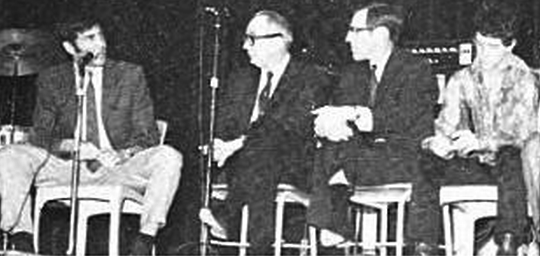
Lou Reed and Beverly Hills High School senior class president Mickey Kaus (left) discuss Today’s Youth with the school’s psychoanalyst and music teacher (1968).

A reader of mine, Conrad Flynn, found the book in his family’s storage. It belonged to his mother, Nancy Conrad (the daughter of actor Robert Conrad), who had attended Beverly Hills High. Conrad sent me scans of the photos of the VU. (I didn’t get to see the book itself.) He also put me in touch with his mother, who filled me in on some details of the VU’s appearance there. A few years after White Light/White Heat came out, a political pundit named Mickey Kaus began detailing, in interviews and online, his role in booking the Velvets for that “gig,” which provided further information I was able to include in the ebook edition.

In response to the print edition of the book, two other people who’d been students there contacted me and gave me some first-hand information. This is from the ebook edition:

As fellow student Michael Dare remembers the occasion, “One day there was an assembly. Everyone had to attend. We crammed into every seat in the auditorium. We stood up. We recited the Pledge of Allegiance. The curtain went up. The high school orchestra played something patriotic. The curtain went down. The curtain came back up and there was the Velvet Underground, who cranked out four songs, including ‘Heroin.’

“Then the curtain went down, they brought out a bunch of chairs, and the Velvet Underground sat down at the apron and had a serious discussion of their roots and their connection to classical music with the principal of the school and the musical director of the orchestra. I later found out this came about through our student body president [Kaus], who was elected because his dad was a major music promoter and he promised to bring good music to the school.”

White Light/White Heat presents an enormous amount of information. How did you keep your data organized, and accessible to you as you wrote?

I started with a list of potential subjects I wanted to contact, which I ordered alphabetically. The list included people I thought might be of some use to speak with, or ask for some background information even if they might not be interviewed or quoted. I put each name in bold, and then put contact info under each. I noted the role each person had in the VU story, except for those which were obvious to me. The list grew a lot as I continued to work, as I found out about more people who might be worth contacting and got leads from people I spoke to.

Before I started writing I filled in the basics of as many events as I could. I created Word files for each chapter, and wrote headings for each possible entry, in chronological order. These included all known concert dates, record release dates, and other major events such as when someone left or joined the group. Olivier Landemaine’s website was a big help in supplying known concert dates (although I did find quite a few others), and some others (such as a sequence of 1967 shows at La Cave in Cleveland) didn’t emerge until after the print edition was published. I added those to the ebook version.

These files, of course, expanded a lot over time. Events I couldn’t pin down a precise date of I entered under more generalized dates, such as the month or even the season in which it took place. It might not ever be known, for example, exactly when those demos of “I’m Not Too Sorry,” etc. in Cale’s loft were done, and so I gave them the most certain dating information that I could.

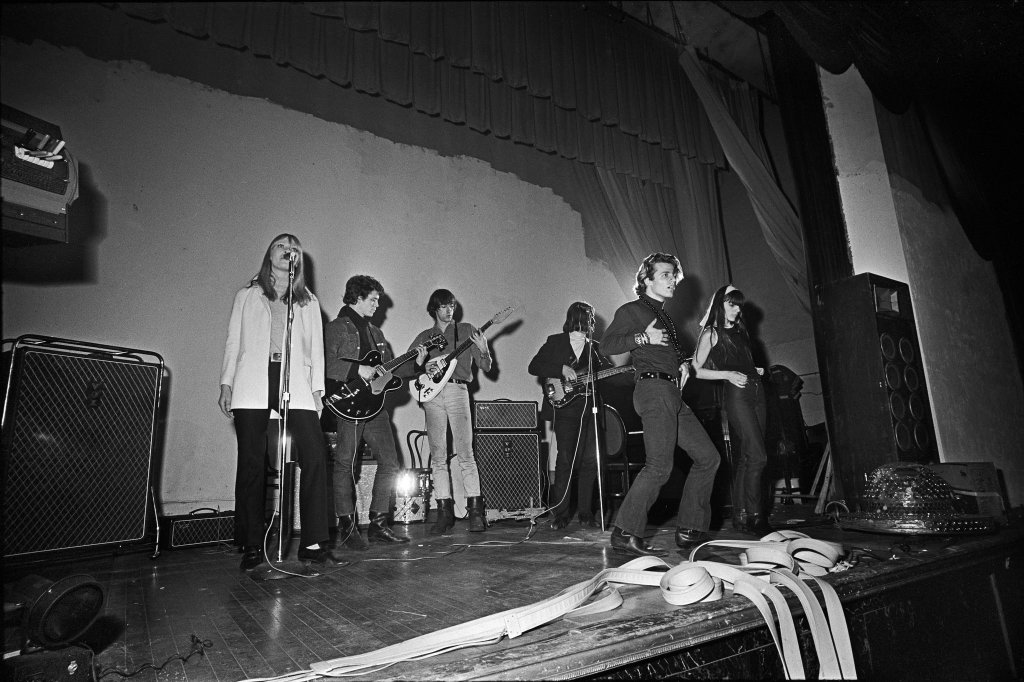
The Exploding Plastic Inevitable, on stage at Open Stage, aka the Dom (April 7 ’66).
Photo by Larry C. Morris/The New York Times

When I wrote the text I didn’t start with the first entry, end with the last, and write in strictly chronological order. I did as much as I could that way, but with new information emerging all the time I constantly created new entries and hopped back and forth across time. I also filled in a lot of entries I’d already drafted with additional info as my research proceeded.

I had a big computer folder of Word files of interviews I conducted, whether by e-mail, phone, or in person. I organized interview transcripts by creating a separate file, with name and date, for each person I interviewed. If there were follow-ups to the original interview, I put those in the same file. It might sound like a lot to keep track of, but it’s not hard to hit Find and go right there.

And there was also a lot of print material — documents, articles, sometimes entire magazines — that didn’t go on a computer. I have a couple boxes of these, and organized them as best I could so I could quickly access them, putting the documents and clippings in chronological order, and the magazines in alphabetical order. I marked passages in articles and books that I wanted to quote or refer to with Post-its.

As for audio recordings (many of them of unreleased material), I filed them more-or-less in the order in which they’d been recorded. I didn’t have the time or technical means to digitize every track, but I have a pretty good memory for what’s on specific discs or tapes, and could find things when needed without trouble.

I’d like now to list names of some of your other respondents, and ask for thoughts about your interviews with each.

Kate Heliczer, the wife of VU colleague Piero Heliczer, was a conduit to disseminating the group’s early demo to London’s hip elite in 1965. She’s an important figure in their early story and yet an obscure one. Your interview is probably the only one with her about her role in VU history.

I knew about Kate Heliczer from letters between her and John Cale that are briefly quoted in Clinton Heylin’s The Act You’ve Known For All These Years. I contacted her through John Hopkins, who was one of the recipients of the demo. I was hoping there might be more in those letters, or more letters that weren’t quoted. Unfortunately she didn’t have much to add, and she’d lost some of the information from those days in a computer crash.

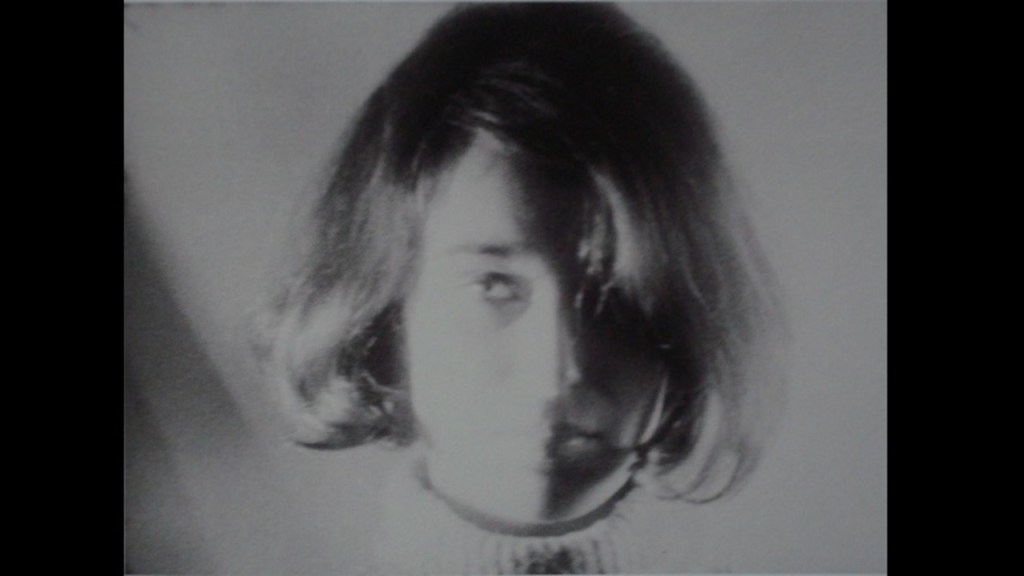
Kate Heliczer, as seen in her Warhol screen test (1964).

Another important breakthrough of your book was your interview with Terry Philips. His testimony drastically reshapes our sense of Reed’s time at Pickwick and of the transition from The Primitives to the VU. For one thing, Philips’ claim of having been supportive of Reed’s new, proto-VU songs directly contradicts Reed’s own statements.

Philips was initially a little nonplussed and amused that a writer would want to speak to him about Lou Reed. He was also a bit wary, since the portrayal of Pickwick in some previous books had made them out to be bumbling nincompoops of sorts, and crass exploiters of teenage tastes for quick dollars. But that worked in my favor to some degree, since he was eager to correct what he saw as misconceptions about Pickwick and his view of Reed at that early stage. An example of this was his comment, “I helped encourage him on his writing to do things that were more like “Heroin” [than] “Cycle Annie” and some of the other things. We were working toward a goal. I thought he could be what he became.”

Part of my approach to music history interviews is to make it clear pretty quickly, in as modest a way as I can, that I know a lot about the subject I’m asking about, and am not going to waste people’s time with ignorant questions. Also, although you’d think this would be a given, I’m polite and don’t press people like they’re websites to be mined for information. Usually, though not always, this has gotten subjects to open up and speak in detail fairly quickly. That was my experience with Philips.

This doesn’t necessarily mean that his account is the correct or totally accurate one. Reed and Cale remembered some things differently, particularly the seriousness with which Pickwick treated Reed’s songwriting and their willingness (or unwillingness) to have controversial songs like “Heroin” released.

Reed did record a couple of versions of “Heroin” at Pickwick, although I hadn’t known that when I spoke to Philips. That said, I don’t think Pickwick could have been a vehicle for Reed’s serious songs or the Velvet Underground, even if Philips had developed a stronger, more adventurous subsidiary label. It was still a company that was mostly known for exploitation and budget records, and it would have been hard for them to make anything like the dent MGM made with their VU LPs, as inept as that company could be in some respects.

Hetty MacLise, the widow of Angus MacLise and a significant contributor to ’60s culture in her own right.

Hetty was quite friendly and chatty. If she’d specifically been interviewed about The Velvet Underground before, I don’t recall any case. As I expected she wasn’t able to say much about Angus’s relationship with the VU, since they didn’t meet until mid-1966, but she was able to fill in a fair amount about his post-VU activities, and a little on what might have happened while he was in the Velvets.

It turns out that she saw the Velvet Underground — after Angus had left the group, but before she met him — at their early California gigs in 1966.

Hetty Maclise with Severn Darden enter the Fillmore for VU/EPI show (May 29 ’66).
Photo by Bill Young/San Francisco Chronicle.

It’s an example of how unexpected info sometimes comes up during an interview. As a more unlikely connection, she told me that she and Angus were busted on a 1968 cross-country drive with (the then-unknown) Loudon Wainwright III, inspiring his later song “Samson And The Warden.”

In contrast to the Velvets’ portrayal as anti-hippies, Hetty and Angus had a marriage ceremony in 1968 at Spring Solstice in Golden Gate Park, near Haight-Ashbury. She also played tambura on the 45 version of the Grateful Dead’s “Dark Star.” And Angus performed (though in an unofficial offstage capacity) at Woodstock, supplying the answer, as I note in the book, to the trick question, “Who was the only member of the Velvet Underground to play at Woodstock?”

Richard Goldstein, a New York-based writer who reviewed an Exploding Plastic Inevitable performance in October 1966.

I don’t think Goldstein had ever been interviewed about The Velvet Underground — although you could say that about a lot of people I spoke with for the book. I say that only to emphasize that a lot of people who can round out history for journalists are out there and happy to talk.

Goldstein had some fresh perspectives, as he hadn’t had to repeat any schpiel about them over the years. I think it’s logical that the Velvets attracted the interest of one of the very first U.S. journalists to treat rock as a serious art, as opposed to some silly phenomenon that was going to blow over once the teenage fans grew up. That’s because the Velvet Underground themselves were treating rock, from both the lyrical and musical angles, in a more serious fashion than almost anyone had before. They sparked Goldstein’s full, critical story in a New York newspaper six months before they had a record out.

It was also good to have a dose of reality injected into the discussion of the Banana album’s failure to get played on New York radio, which is portrayed at times almost as a conspiracy. As Goldstein told me, “You always wondered why people were surprised. Given the material on this record, of course they wouldn’t play it. … It wasn’t just because of the content, but also the musical sophistication, [which] was way beyond anything that pop radio would have countenanced. I don’t know if [the Velvets] ever talked to me about that. I don’t think they did. I certainly would have told them, ‘Yeah, right. It’s gonna take a long time before this stuff is playable’.”

Peter Abram, co-owner and manager of The Matrix, a small club in San Francisco at which the Velvets played and were recorded.

In one of my more roundabout paths to an interview, I was referred to Stephen Parr, who ran Oddball Films in San Francisco and who was in contact with Abram. When I called Parr, he asked me a bunch of questions about the VU before even discussing connecting me with Abram. One of them was something like, “Didn’t Tony Conrad play violin in the Velvets?,” and I was thinking he didn’t have his history too straight. I answered the questions correctly, including the one about Conrad. That seemed to have been a deliberate trick question, as afterward he began to relax, and then he gave me Abrams’s contact info. I guess he was a gatekeeper, and that there were enough people who didn’t know their stuff or had bogus projects that he was now making people prove their authenticity. Parr and I later became friendly, and he even had me present some events at Oddball Films, including a program about The Velvet Underground to benefit an organization that was trying to help get a local college radio station back on the air.

The actual interview with Abram was strange as well. He was firm that he could only give me 15 minutes, and even though we both live in the Bay Area he would only do it by phone. So I had to select only the most vital questions to squeeze into the limited time, though I certainly would have liked to ask more. With what little opportunity I had, though, I was able to get some useful information. Which was important, since I think the 1969 Velvet Underground Live album — the majority of which was recorded at the Matrix — is the best live record of all time. Even with the release of a box set of Matrix tapes a few years after (the print edition of) my book came out, there are still questions about them that haven’t been satisfactorily answered, especially regarding the dates.

That was an unusual path to locate someone who I wouldn’t have expected would need to be so cloistered. Is it fair to say that in general your paths to locating and contacting people was on a case-by-case basis, and that there was no single “secret method”?

Yes, definitely. There’s no standard way to find people for interviews and research, and no guidebook or journalism school rules I follow. Finding people has, of course, gotten a lot easier with the rise of the Internet. Even in the time since I did the bulk of my VU book research, there are a lot more online resources for tracking people.

The roads to locating people are numerous and varied. Some you might think have vanished turn out to be instantly locatable through their own website. What helped the most when I couldn’t find a person easily and independently, however, was the network of contacts — not necessarily VU-related ones — I’ve built up through decades of rock journalism. Often someone I know will know how to find someone, or know someone else who might know. I’ve kept contact info for a lot of those people dating back to when I got my first computer, and that often came in handy.

Which leads to another point that might seem obvious, but isn’t always observed. If you’re going to rely on the generosity of others to find contacts and info, be available to do the same for anyone who asks, without asking for money or expecting to be paid. You don’t have to help someone who’s rude, has a bogus project or has sleazy ulterior motives, but those are rare in my experience.

Andrew Oldham.

There weren’t many cases in my VU book where I used quotes from previous interviews I’d done, but this was one as I’d interviewed Oldham by e-mail back in 2001 for my two-volume book on 1960s folk-rock, Turn Turn Turn/Eight Miles High (now available in one volume with extra material as the ebook Jingle Jangle Morning). He hadn’t played a big role in folk-rock, but I wanted to ask him about Nico’s 1965 single and also his productions of The Poets, the finest Scottish ’60s group. When it came time to write my VU book, I was able to return to his comments about Nico.

While I appreciated the time he gave me in answering my questions, I wish I’d been able to speak to him instead of doing the whole interview by e-mail. Oldham has a kind of grandiose and, to my ears, unnatural way of phrasing things when he writes. You read that to some degree in his memoirs, and it’s even more pronounced in his e-mail. Maybe he would have been more plain-spoken by voice.

Peter Jenner, best-known as an early manager of Pink Floyd. Had Kate Heliczer primed you to realize that he’d be a pertinent contact?

Actually I first learned of Jenner’s interesting, if peripheral, involvement in the Velvet Underground story back in the early 1980s, in the Pink Floyd chapter of Nicholas Schaffner’s book The British Invasion. Schaffner wrote that in 1966 Jenner “noticed that rock was spawning an avant garde of its own, and concluded that a progressive pop group could prove just the vehicle with which he might make his fortune and still keep his principles intact. Jenner’s first overtures were made to New York’s Velvet Underground, whom he had heard on tape, but a trans-Atlantic conversation with Lou Reed revealed that the band’s affairs were already being handled by one Andy Warhol.”

(Jenner told me the person he’d actually spoken to in that call was John Cale. Maybe that detail was misreported by Schaffner or, more likely, a source from which Schaffner was working.)

Jenner was very friendly and helpful in our phone interview, though there wasn’t much to cover since his role in the Velvet Underground story was minor and fleeting. It was disappointing to hear he’d lost the early VU tape he got from Kate.

Vic Briggs, guitarist for Eric Burdon & The Animals, who had also spent a few days as producer of the Velvets’ third album. How had you known to talk to him?

Here’s where some deep research into printed material pays off. In the November 16, 1968 issue of the British music weekly Disc & Music Echo, in the “Hollywood Scene” column, Judy Sims wrote, “I called two friends to see if they knew of anything that had happened, pop-wise. One told me that Vic Briggs is now producing the Velvet Underground.” That was the first and only mention I came across of Briggs producing them.

I think I got in touch with Briggs, without a problem, through Sean Egan, the author of the Animals biography Animal Tracks. That was particularly useful since Briggs has gone by a different name, Anton Meredith, for many years, and was living in the U.S., not his native UK. It would have been hard enough to try and find a “Vic Briggs” cold, and that much harder if I’d been searching for the wrong name all along.

Briggs had never been asked about his brief time producing the Velvets for the record before. And while, again, the event was so fleeting there wasn’t a whole lot to cover, he was forthcoming and friendly about what he could remember. As a bonus, I knew that Tom Wilson had produced the Animals while Briggs was in the band, and around the same time Wilson was producing the Velvet Underground. So Briggs had a quote about Wilson’s function (or non-function) as a record producer.

As a side note, here’s another example of how a researcher always have to be on the lookout for obscure print sources. It was only around late 2019 that I became aware of a very specialized book titled The MGM Labels: A Discography, Vol. 2 (1962–1982). Its entire content is lists of sessions without descriptive notes, but according to that volume, ten Velvet Underground songs were logged between May 12 and 14, 1969. Most of them have been issued (and comprise part of the so-called lost fourth album), but it also lists titles for three songs that haven’t circulated: “Sandy Sex,” “Steve’s Tune” (maybe a reference to Steve Sesnick), and “War-ho.” It also lists “Sad Song,” which has circulated but not in an MGM version.

Mick Farren, who claimed to have heard a copy of the UK-circulated ’65 demo tape, and from it was soon covering “Prominent Men.”

I learned about that when I interviewed Farren, in late 1996, for the Deviants chapter of my book Unknown Legends Of Rock’n’Roll. It’s another of the infrequent times I used material from previous interviews in White Light/White Heat.

Mick Farren
(Getty Images)

Here’s the relevant passage:

As Farren tells it, the Deviants procured their copy [of the VU demo tape] from the U.S.-born record producer Joe Boyd, soon to become famous as manager and producer of Fairport Convention, Nick Drake and others. (Boyd, the author of a recent acclaimed memoir of the period, White Bicycles, has no memory of hearing the Velvet Underground prior to the release of their debut album in 1967.)

“They were pre-first album,” Farren says of the tapes, which, he adds, were promptly stolen from the Deviants by persons unknown. “We performed a song called ‘Prominent Men’ for a while that we took off those tapes. I was almost beginning to think I’d dreamed them. Everybody denied all knowledge of them. And suddenly they resurfaced [on Peel Slowly And See]: three or four versions of ‘Venus In Furs,’ the very strange acoustic version of ‘Waiting For The Man,’ ‘Prominent Men,’ ‘All Tomorrow’s Parties.’”

That would make the Deviants not just the only band to cover “Prominent Men,” but also most likely the first group ever to cover a Velvet Underground song. In his autobiography Give The Anarchist A Cigarette, Farren adds that the VU material “helped open us up to wider potentials with songs about sadomasochism, copping heroin and terminal narcissism, and artistically we robbed them blind. We had their classic ‘I’m Waiting For The Man’ down well before their famous Banana album came out and every half-assed, pre-punk, three-chord band — including David Bowie — started playing it.”

This suggests that the tapes he had were the same ones as on Peel Slowly And See. I’m not sure they were, but it seems unlikely we’ll determine this, since he says the tapes were stolen.

I do think there were probably more 1965 demo-type tapes than the ones on the Peel Slowly And See box, though again it’d be very difficult to pin those down now. Often such demo tapes have pretty poor sound, but the ones on Peel Slowly And See have pretty clear fidelity. So if there were extra tapes in even limited circulation that were kept in acceptable storage conditions, they might sound pretty good.

Has the possibility crossed your mind that each copy of the Ludlow Street demo they sent out was a unique recording? I can’t recall who I first heard posit that theory, but the argument rested on the question of whether they would’ve had ready access to tape duplication at that time, coupled with the fact that they were rehearsing those songs pretty regularly, and it therefore made more sense to simply record multiple run-throughs. If true, it’d mean there was no definitive version of the demo, and that the tracks included on Peel Slowly were simply representative of the batch.

I think that’s possible, though that would be very difficult to trace now, unless Cale has more original reels in his possession than he’s let on (or that he’s bothered to look for). I think it’s unlikely they would have sent tapes out to prospective labels or contacts without making copies, though maybe I’m underestimating how poor they were at the time and what kind of access they had to duplicating equipment.

Rosalind Stevenson, a friend of the band whose silent film of Reed and Cale composing “Sunday Morning” in her apartment is available on YouTube.

Still from Rosalind Stevenson’s short film The Velvet Underground / Sunday Morning.

I’m not sure where I first heard about Stevenson’s film, but one of my most interesting accidental discoveries involved her. I was doing research, primarily on the films of Piero Heliczer, at the Anthology Film Archives in New York. While going through a a file cabinet of paper documents I noticed a folder there for Rosalind Stevenson. Inside it was a small poster for a Stevenson film from 1966, Deux Voix, starring Elektrah Lobel [a singer and guitarist who played briefly in the proto-Velvet Underground], with a small picture of her. This poster is reproduced in the book.

That also gave me a bit more to ask Stevenson about in our interview. She recalled that “All Tomorrow’s Parties” was originally conceived by Reed for possible use on the soundtrack of Deux Voix, although it wasn’t ultimately included.

Ben Edmonds, a respected music journalist and A&R exec.

I was already in touch with Ben, who in the late ’90s had asked me for background info and contacts toward a Fred Neil story he was working on for Mojo. I was working on a Neil chapter for my book Urban Spacemen And Wayfaring Strangers. I think the mindset among many journalists in a similar situation would have been, “I’m already working on this for my own purposes, so I’m not going to share any information with you.” But he asked politely, and my feeling was that there’s room for two Fred Neil stories.

Although I’d seen Ben’s writing for many years in various outlets, it was something I read — I think in Peter Doggett’s book Lou Reed: Growing Up In Public — that tipped me off to his having tried to put together a collection of VU film footage. While I was disappointed to learn he didn’t find much of consequence, I appreciated the honesty of his perspective. Instead of saying, “Oh man, this would blow people’s minds” if he came across a scrap of silent footage of the band hovering around the Factory or an outtake from the film where Moe was tied to a chair, he said, “People ooh’d and ah’d at the fabulousness of the footage, but I was hugely disappointed. In the end they only had what we already knew they had; there was not one scrap of anything new.”

I had assisted Ben with that unconsummated VU film project, and wish he’d lived long enough to see Todd Haynes’s documentary; while quite different from what he had in mind, it is still in a way a culmination of Ben’s idea.

Dick Summer, Boston and then New York DJ who made the transition from Top 40 to FM programming.

I contacted him through his website. I think I got the idea to interview him from Ben Edmonds, who remembered Summer playing the VU on his show. While it’s true that the Velvets didn’t sell a huge amount of records or get a ton of airplay, they got played on radio more than has been acknowledged, and maybe more than they realized. After all, they weren’t tuning into stations all over the country all the time, or seeing playlists from them. I uncovered a number of such instances that are mentioned in the book, sometimes with quotes I got from DJs or listeners.

Even in New York, from whose airwaves Sterling Morrison, at least, claimed they had been banned, WPLJ’s Howard Smith interviewed Reed (a tape surviving, though I don’t know if all or part of it was aired on the radio at the time). Scott Kempner, later of the Dictators and Del Lords, remembered a couple of WFMU DJs playing the Banana album “like it was a hit album.” WNEW’s Bill “Rosko” Mercer narrated the radio ad for the third LP, ’though I don’t know if he played the Velvets on his programs. and Dick Summers confirmed to me he played the Velvets on WNEW after he moved there from WBZ in Boston.

I don’t want to minimize the hurt the band must have felt at not getting played as much as they expected or deserved, but I think the perception that they were banned from New York radio has been blown out of proportion, creating the impression they didn’t get played anywhere.

And now, some people you weren’t able to interview.

Steve Sesnick, successor to Warhol/Morrissey as VU manager.

Sesnick was one of the people I most wanted to interview, and most frustrated about not getting to. Back in 2001, long before I got the White Light/White Heat book deal, I was contacted by someone who knew him. She was curious why he had such a bad reputation in rock history. When I started my research, I got back in touch with her to ask if she could help connect me with Sesnick. She did try, but reported that he wasn’t interested. Almost five years after the book came out, a rock journalist friend tried getting an interview with him for another project. He didn’t make headway, either.

The only substantial quotes I’ve seen from Sesnick about the VU are in the Up-Tight book. He’s a pretty unpopular figure among some members, though Tucker had some positive things to say about him in your interview with her, and Martha Morrison said some positive things in my interview with her. I want to give people a chance to air their side of the story. I don’t know why he’s uninterested in doing so.

Hans Onsager, the band’s longest-serving road manager.

I had an e-mail address for him, but he didn’t reply to my interview request. That’s frustrating, since he must have spent more time around the VU than almost anyone. But not everyone is interested in talking to the media, and some stories will never be told.

With all my books, it seems like I only get about half the interviews I’d like. As a general rule the more famous a person is the harder it is to get an interview with them, but many people who aren’t well-known don’t reply to queries either. I seldom get an actual rejection; usually interviews aren’t done because there’s no reply. Sometimes persistence pays off, but not always.

Anyone else you wanted to talk to were unable to?

Obviously, there are a few people with important roles in the story but who were no longer around, like Nico, Andy Warhol and Tom Wilson. In some of those cases, at least, there was useful material from interviews they’d done while they were alive.

I was really frustrated there wasn’t more specific VU material in Wilson’s interviews, even the Music Factory one he did with Cale and Reed. He was never asked about the Velvets in significant depth, and I’m sure he would have had a lot to say if prodded. I would like to have asked him about Paul Morrissey’s claim that the VU was only signed because of Nico; accusations that he didn’t pay much attention to the Velvets (or, for that matter, to other of his artists) in the studio; the chronology of his involvement with the VU; the challenges of recording the loud volume for White Light/White Heat; the perception of the band within MGM; why there was a session for “Sunday Morning” long after the other Banana album tracks were recorded; and his take on the supposed Mothers/Velvets rivalry.

Being interested above all else in their music, I wish I’d been able to find more people involved in their studio sessions, though I did speak with Norman Dolph, Vic Briggs, and Lewis Merenstein, who produced Cale’s Vintage Violence. I couldn’t locate Val Valentin, who engineered some of their MGM sessions. I also couldn’t locate Adrian Barber, who I would’ve liked to ask why he didn’t stay the course as the producer for Loaded, and how other producers became involved.

There were a couple of people who asked to be paid to be interviewed. I didn’t do this, as I don’t think it’s ethical journalism. Also, it’s not fair to the many other people I interviewed, some of whom gave me a great deal of time, who didn’t get paid. For a different project, a very well-known musician asked to be paid, saying that he billed for interviews like a lawyer would bill for the time they give clients.

This leads to another story you might find interesting. I interviewed Doug Yule in person, for about two hours, in the backyard of his Seattle home. He didn’t ask to be paid. He was generous in his time and answering in thoughtful depth. After the book came out, I did an event for it at the main branch of the Seattle library, near where he lives. I invited Yule to come and say a few words. Also, since the library has a modest honorarium for guest speakers, I let him know that I’d ask the library to give him the honorarium. He did appear at the event and was gracious to fans there. He turned down the honorarium, though, saying that he preferred the library to have the money.

You hear so many stories about greedy rock stars, some of whom have a sense of self-importance way out of proportion with their talent. You don’t hear very much about the decent people who not only give generously of their time for interviews without getting paid, but in this case even turn down money for which they have a reasonable claim, feeling that a public service organization should use it. I’m not trying to make Yule out to be a noble hero, but it’s a commendable instance of behavior counter to the stereotype of how rock stars behave.

That brings me to the most obvious people I didn’t speak to for the book: Lou Reed, John Cale and Maureen Tucker. Reed and Cale — or more likely their managers — did not reply to my requests. Tucker, on the other hand, indicated a willingness to answer questions. I e-mailed questions, emphasizing subjects that hadn’t been covered much in interviews, but I never got answers, and I never found out why I didn’t. She friended me on Facebook after the book came out, so I don’t think it was personal. Fortunately there was interview material with each of those three for me to draw upon.

You didn’t bring it up, but: Had I been able to interview Reed, what would I have most liked to ask him? Limiting myself to a baker’s dozen, these questions are important to the Velvet Underground story:

* Why did you fire John Cale? He never answered this with much detail. Asked by ZigZag in 1972, he said, “It’s very private.” In BBC Wales’ John Cale documentary many years later, he said much the same thing: “That’s really personal, and just probably something I wouldn’t talk about.”

* How do you feel now about having Sterling tell John he was out of the band, as opposed to telling him yourself?

* According to Paul Morrissey, Tom Wilson only signed the Velvets because of Nico. Was that ever your impression, and did you, as Morrissey maintains, take the lead vocal for “Sunday Morning” against Wilson’s wishes when it was intended for Nico?

* Morrissey told me you got out of the management contract with Warhol by disbanding the group and saying they were splitting up, and then reforming them. Do you remember anything of that sort happening?

* You’ve expressed in interviews that you envisioned the first three Velvet Underground albums as installments of an unfolding novel. Was the song “Jesus” written for a character in that narrative, or was it more a directly personal expression?

* Had you had in mind a fourth installment of that narrative, and perhaps even additional ones after that?

* Did the unreleased fourth album include songs that might’ve been used for that narrative, and does Loaded have any that would’ve fit it?

* Were the 1969 studio recordings intended for a fourth album?

* How did the Velvets get off MGM and onto Atlantic?

* Looking back, do you wish you’d waited until Tucker was able to play again before recording Loaded?

* Why did you quit the band right before Loaded was released?

* What were the circumstances of how you got the copyrights to the Loaded songs, and the exchange of giving up claim to the name Velvet Underground?

* How important were Lisa and Richard Robinson in helping steer you back into the music business and toward your solo career? Were you writing any songs in the time between leaving the VU and the first solo LP, or did you draw solely on ones you’d already written (and/or performed or recorded) with the Velvets?

Richie Unterberger at Alcatraz in 2015, attending an exhibit of work by Ai Wei Wei.
Photo by Catherine Lee
interviews

Interview with Amateur Hour

AMATEUR HOUR are a newish, three-person experimental/psych act from Gothenburg,
Sweden whom I’ve been quite excited to stumble upon in recent months.
Their stuff’s not exactly easy to find; you may wish to try illicit means if you can’t come across the records.

I get the same sort of scratchy, lo-fi, intensely enveloping sense of distortion & spacelessness that we heard in Dadamah twenty-plus years ago from them. One track will include ethereal vocals much like Liz Fraser’s from Cocteau Twins; the next might be a formless instrumental that sounds like as if someone’s flipped on a 1940s-era generator & just let it hum in the background.

Someone needed to get to the bottom of the Amateur Hour conundrum, so I nominated myself and set to work. Interview conducted via email in December 2016.


Amateur Hour: Dan Johansson, Hugo Randulv, Julia Bjernelind

Dynamite Hemorrhage: The Amateur Hour album is a beautiful mix of murky, experimentally-tinged pop and a darker, more strange sort of electric folk that could probably be called “psych” for lack of a better term. When the three of you sat down to make music, how did you verbalize what you wanted to sound like?

Hugo: The way i see it, we want to make simple and beautiful pop music. But we
have never rehearsed or written any songs together, so all the music on
the album is either improvised or recorded on its own and then placed
together with other sounds to make it fit into the idea or thing that we
were going for. We rarely talk about how things should sound before we
meet. It’s all pretty much decided the very moment we start recording.

Dynamite Hemorrhage: Tracks like “Get Fucked” aren’t really music per se,
but that might be my favorite piece on the album. What were you going
for with that one, and how would you describe how it was made?

Julia: Hugo and Dan had made an instrumental piece they showed me, and they said I
could do anything i wanted with it. It was really dreamy and soothing, still very melancholic and sad. I wrote the lyrics and we just recorded it. That’s how we do with most songs. We try not to think about or talk too much about what we’re doing. I think the lyrics are about alcohol abuse in this one.

Dynamite Hemorrhage: There’s a “Garlands”-era Cocteau Twins feel to some of the tracks, such as “Paradise Lost”, with a lot of swirling synth & multi-tracked, sugary vocals. Is that band an intentional influence – and if not them, whom?

Hugo: Cocteau Twins is definitely a band that have had a big influence on me, at least. I think that kind of dreamy-sounding pop music from some of the bands on 4AD and artists like Julee Cruise and Virginia Astley has had an impact on our sound. Otherwise i guess we draw inspiration from all over the place. From early industrial music and noise to some indiepop music, like the bands on Sarah records.

Dynamite Hemorrhage: Julianna Barwick is another (significantly less smudgy/DIY) artist whose music slots in well next to yours (at least I think so), but I suspect you’re going for something a little less ear-friendly on most tracks. Would you agree with the comparison, and if not, who else currently making music would you prefer to align your approach with?

Hugo: I had never heard of Julianna Barwick before, i probably should have though, it sounds great! I totally get the comparison, but i think the thing we do is a little bit more focused on the improvisation and make up stuff as you go kind of work method. Our songs are not so much compositions as it is like a sonic collage made up of stuff we have recorded on different occasions, and then afterwards put into a context.

I wish I could namedrop a bunch of currently working artists that we feel have something in common with. but i honestly can’t think of one. One the other hand, I am not really too up to date with what’s out there…

Dynamite Hemorrhage: I get the sense from various things that are dribbling out & from fanzines like FÖRDÄMNING that there continues to be a pretty deep Swedish musical underground of DIY noisemakers, off-centered rock bands and artists of many strange colors. How true is that for you, living there, and are you content with what’s right there in Gothenburg?

Hugo: I feel that there is a pretty strong, although extremely small, scene in Gothenburg at the moment. But it’s hard to get an outsider’s perspective of it since I know most of the people very well, and play with a handful of the projects that could be tied to this scene. But it continues to inspire and a handful of really, really good releases tend to come out every year so I’m really glad about it.

Dynamite Hemorrhage: How much better or worse is it for you to be making music in Gothenburg as opposed to Stockholm?

Hugo: I don’t know actually, i have been living in Gothenburg for my entire
life and don’t know too much about the scene in over there. But
Gothenburg has always had a very healthy music scene. But the eyes are
mostly set on Stockholm so a lot of the stuff in Gothenburg remains
fairly underground, which is a both good and a bad thing.

Dynamite Hemorrhage: Where has Amateur Hour played live so far, and what goes into a live Amateur Hour performance? Your first gig, which is on YouTube,
looks like you did everything from flip on some tapes and sing to play
together in a pretty “standard” guitar/guitar/drums lineup.

Julia: The one on YouTube is actually the only gig we’ve done so far. It was at Folk in Gothenburg; we were the opening act for Neil Hagerty. Since we’re not like a regular rock band that rehearses two times a week, we didn’t really have a repertoire, so we decided in what order we’d play the songs and how some of them could be played live. It was pretty hard with some of them, like Sprängd, that was improvised while we all were really drunk.

We tried not to make it too much like a singer/songwriter gig and not too noisy and wild. Somewhere in between, I guess.

Dynamite Hemorrhage: Online I’ve found that “Amateur Hour contains members from Enhet För Fri Musik, Makthaverskan and Westkust”. What can you tell me about those bands – and where does Amateur Hour fall in your lists of musical priorities?

Julia: Hugo has been playing in Makthaverskan since he was 16 I think, and me and
Hugo met during 2010 when we started playing in Westkust. We had always
been talking about making more experimental music together since we’re
both big fans to a lot of post-punk bands like Birthday Party etc, but
nothing really happened. Then Hugo and Dan got to know each other when
Hugo went to Sewer Election (Dan’s band) gigs and started talking. They
formed Enhet För FrI Musik and then they asked me if I wanted to do some
vocals on a new project. And Amateur Hour was created.

Hugo: Yeah, and since both Mathaverskan and Westkust are more traditional “rehearse
and write songs together” kinds of bands, both me and Julia really
enjoyed the freedom of writing songs the way we do in Amateur Hour.
Enhet för fri musik, which consists of me, Dan, Gustaf Dicksson, Sofie
Herner and Matthias Andersson, have a bit of the same working method as
Amateur Hour, but even more chaotic i think.

Dynamite Hemorrhage: You’ve got an album in an edition of 100, a “dub plate” single in an edition of 20, and a tape in an edition of 60. Is that really all you envisioned selling or giving away?

Hugo: Both the LP album and the cassette tape was released on labels closely connected to the band. I run the Forever United label with some friends, and me and Dan are
involved in the the Förlag För Fri Musik label with the rest of Enhet
för fri musik. The 7″ was released on Folk records. I guess we did such a
limited number of records just because it’s cheaper and more convenient
to not have a bunch of records that no one wants lying around your
place. i think there is also a beautiful thing in something that is not
available just through a click with your computer or whatever. It’s done
in a few copies, and that’s that!

Dynamite Hemorrhage: What else do the three of you do to get by and live life? Work, families etc.

Hugo: No one of us get any money at all from the various musical projects we are
involved in, so we have to get by with day jobs or studies…

Dynamite Hemorrhage: It’s only been half a year since your first gig and just a little over that since you started releasing material. Where do you intend to take this project in 2017?

Hugo: We have been doing some recordings  recently and hope to be finished with our second album in 2017.

interviews

An Interview with Thistle Group’s Claire Mahoney

An Interview with Thistle Group, a.k.a. Claire Mahoney


THISTLE GROUP is comprised of Claire Mahoney, an Auckland, New Zealand-based musical unit of one. I heard her amazing two-song demo on the Stabbies Bandcamp page, and was immediately zonked out to this crude, experimental, multi-dimensional musical lunarscape that’s alternately lulling, jarring and transfixing. Or at least her music inspired me to imagine I was.

Granted, her output to date is the equivalent of one (long) 45rpm single, yet both tracks have been favorites on Dynamite Hemorrhage Radio, and enough of a mystery wrapped in the proverbial riddle that it made sense to go directly to the source to try and piece it all out. I sent Ms. Mahoney a set of questions this month, and she was kind enough to let us all in on how she creates her music.

Dynamite Hemorrhage: On the Thistle Group tape there’s some very pleasant, lo-fidelity layering that connects different parts of the songs/pieces together, which is then interrupted by jarring guitar and vocals. How did you put all of it together, and what can you say about the overall sound & feel you were looking to put out there?

Claire Mahoney: The tape was recorded live from one of the first gigs I played solo. I started making up vague songs from tape loops that a friend and I had made for another project and then playing around with them, often slowing them down and layering guitar and vocals over the top.

I enjoy the wonkiness of overlapping the same loops to create texture and working with everything
falling in and out of time. I see the vocals as adding another texture and use them as an instrument for layering. I try to create movement and contrast by using the warmth of tape loops and fragile vocals with a harsher guitar butting in and breaking it all up. The use of repetition is also an important element for creating an overall sound. Music that I respond to and influences me often
uses repetition and is very simple/primitive in its form.

Dynamite Hemorrhage: When you play live as Thistle Group, what are you packing – simply tapes and a guitar, or is there more that you’re able to do as a solo performer?

Claire Mahoney: I primarily use a reel to reel with tape loops which forms the structure that I build upon. Sometimes I’ll just use that with some vocals over the top, or play the same songs with a guitar or keyboard and some walkmans. I’m used to working with limitations and I don’t like to
over complicating things. It’s also important that it’s able to be adaptable as I hardly own any of my own gear so I’m constantly trying to put something together with what I can find at the time.

Dynamite Hemorrhage: What’s the response been to you as a solo live performer to date?

Claire Mahoney: A friend described the last set I played as feeling like trying to get out of a deep medieval well. I think that’s the best response and most accurate description so far. It always feels like it’s on the verge of falling apart at any moment and sometimes it does. I’m interested in
playing with the notion of failure and navigating a space between something working or not and being okay with it.

Dynamite Hemorrhage: Does Thistle Group/Claire Mahoney collaborate with anyone else under that name, or plan to?

Claire Mahoney: I’ve always seen Thistle Group as a primarily solo project but not exclusively. My sister Louise and I played a very off the cuff show together a few months back under Thistle Group. I was tired of playing the same set and I hadn’t had any time to practice so we quickly threw something together using the same songs but really fucking with them. Lou’s got incredible stage presence and one that I find quite unpredictable in a really great way.

Dynamite Hemorrhage: Tell us a bit about the groups you’re in and/or have been in previously; which are still active, and which have been documented with vinyl, tapes, online downloads etc.

Claire Mahoney: I moved back to Auckland at the end of 2011 and soon after started It Hurts with
Angeline Chirnside and Beth Ducklingmonster. We were active 2012-2014 and put out a couple of tapes, one on Angeline’s labe Clean Teeth and the other on Albert’s Basement. There’s also a 7” on Soft Abuse. Before that I hadn’t really played or anything apart from having a few jams with friends.

The last few years (until recently) I played drums in Olympus with my pals Pat Kraus and Stefan Neville. Those two had been doing Olympus for years and had put out a record  but it really only became a live band when I joined. It was very casual, we played live maybe a handful of times and often did weirdo covers of our own solo stuff.

Dynamite Hemorrhage: Your music’s ended up on Stabbies, who chronicle some pretty intense and interesting juxtapositions of New Zealand experimental and rock-based music. Would love your thoughts on their role in your “scene” and for musicians like yourself.

Claire Mahoney: Stefan has been on board since I started playing with It Hurts. He recorded us numerous times and was always very supportive of what we were doing. When I decided to release the Thistle Group tape he offered to put it on the stabbies bandcamp.

Stabbies has become active again recently with heaps of great stuff going up on the bandcamp page. Lots of it is old material/ friends but he’s just put out a new 7” by Ben Holmes which I highly recommend.

Dynamite Hemorrhage: How much of an ongoing concern is Thistle Group? Are you planning on making music under that name repeatedly, from here on, or was this year’s tape a one-shot deal? If it’s not, where are you taking Thistle Group in the months to come?

Claire Mahoney: I’m slow and do things in my own time when they fit in. I’ve got a bunch of songs that are piling up that I’m going to record over the NZ summer when I get some time off. I’m also planning to do some touring in Japan and maybe Europe in the first half of 2017.

Dynamite Hemorrhage: It’s always a bit of a stretch to ask someone how much their art is “informed” by their surroundings, but I guess some people are and some aren’t. How does Auckland and its environs come into play for you – and/or how does greater New Zealand?

Claire Mahoney: I’m lucky to have some supportive friends here in Auckland. It’s a small scene but most of the time I don’t feel like that’s a problem as we have a larger community all over the world that we’re in touch with. Auckland is where I grew up, it’s my Tūrangawaewae. I can see two volcanoes from my bedroom window and the sea is close by, those things are important to me.

Dynamite Hemorrhage: Why “Thistle Group”?

Claire Mahoney: The name Thistle Group came from something I reading about a group of female artists who had gone under the name Thistle. The writer referred to them as the ‘thistle group’ and for some reason that name stuck with me and felt right for a solo project.

Dynamite Hemorrhage: What does Claire Mahoney do in her non-musical life?

Claire Mahoney: I’m terrible with a routine so I can only think of what’s been happening today. That’s involved changing my car tyre with my elderly neighbour giving instructions, going to work for a few hours and finishing some plan drawings, coming home and having a nap, then spending some time in the garden this evening.

Listen to Thistle Group’s music here.