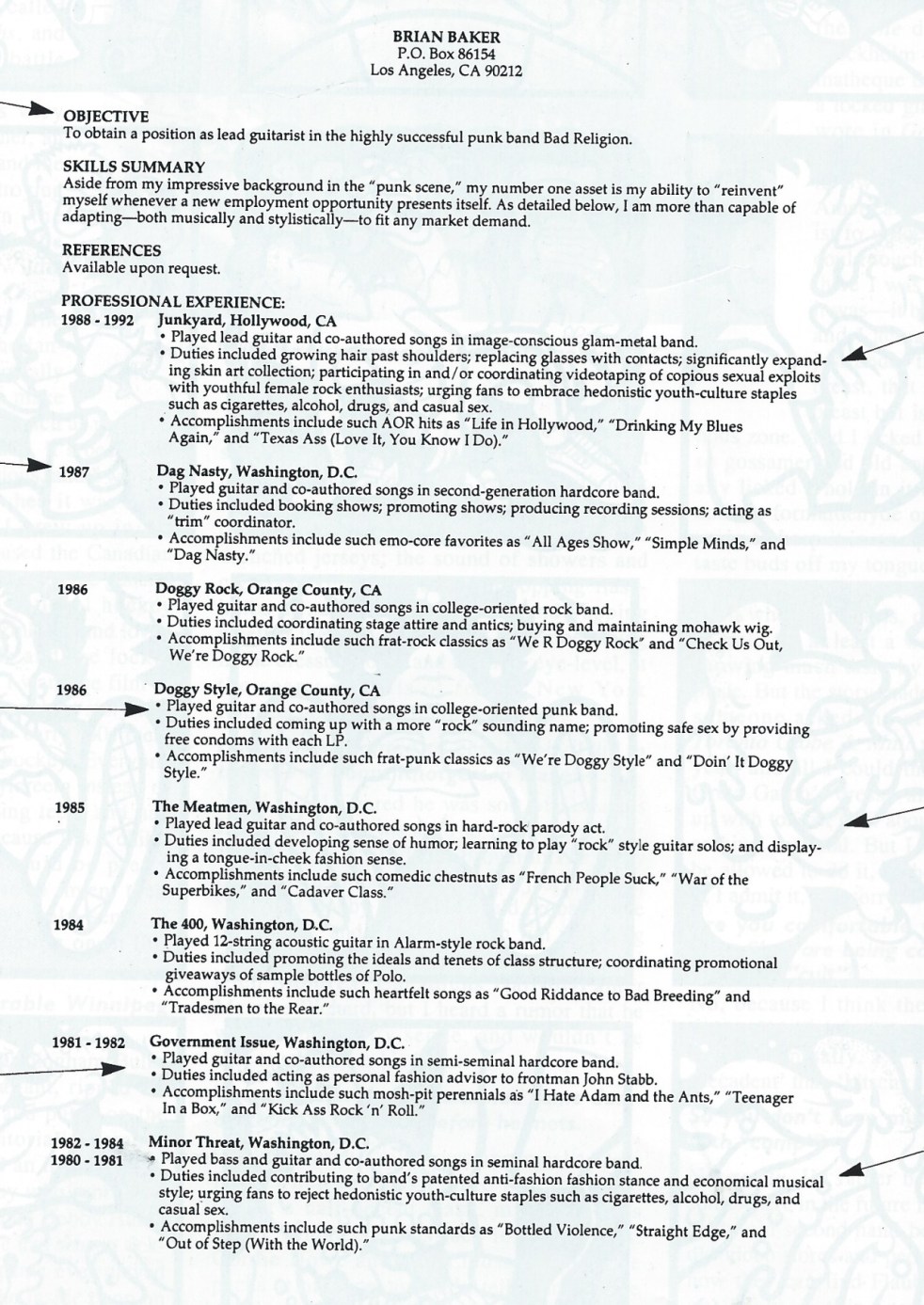
Brian Baker’s Rocknroll Resume
Brian Baker’s CV/resume, courtesy of a mid-90s issue of Motorbooty. Had forgotten he was in “Doggy Style”.
Brian Baker’s CV/resume, courtesy of a mid-90s issue of Motorbooty. Had forgotten he was in “Doggy Style”.
Here’s the next of an occasional step sideways into the heavy, reverbed-out triposphere of 1970s Jamaican dub. HEMORRHAGE IN DUB #3 even contains a 2016 recording this time around, in addition to some new reissues and other deep cuts from the land and time of dub plenty.
Stream or download HEMORRHAGE IN DUB #3 on Soundcloud.
Stream HEMORRHAGE IN DUB #3 on Mixcloud.
Track listing:
YABBY YOU & THE PROPHETS – Beware Dub
TIPPA LEE – Original Cassette
KING TUBBY & THE AGGROVATORS – Higher Ranking
POET & THE ROOTS – Defense Dub
TWINKLE BROTHERS – Free Africa Dub
SCIENTIST – Time Warp
THE GREEN STARS – Effortless Dub
KING TUBBY’S – King at the Controls
BUNNY “STRIKER” LEE – Dub Magnificent
LEE “UPSETTER” PERRY – Cloak & Dagger
CHANNEL ONE – School Days Version
GLENMORE BROWN – Assack Lawn No. 1 Dub
THE AGGROVATORS – Step It Up In Dub
WINSTON EDWARDS – Ronald Biggs The Great Train Robber
There’s an updated SIBYLLE BAIER website out there now, put together by her son Robby. It has a few photos I’d never seen before, links to her music, and other assorted ephemera.
I interviewed her in Dynamite Hemorrhage #3, if you’re interested in reading it.
Just over an hour of panicked and jittery sub-underground rock music this time around on DYNAMITE HEMORRHAGE RADIO, recorded direct-to-laptop on an otherwise uneventful Wednesday evening in San Francisco, CA.
I am pleased as punch to bring you a slew of new material from the likes of TYVEK, MIA LOUCKS, AQUARIAN BLOOD, SEX TIDE, THE INTENDED, PALBERTA, LOS CRIPIS, GHOSTWRITER and more. I am nearly as pleased to offer up selections from the ages as well, featuring SALLY SKULL (pictured), CAPTAIN BEEFHEART & HIS MAGIC BAND, LITTLE CLAW, THE MINUTEMEN and other stars of the DIY artastic underground.
Download or stream it, and see if it meets what by now must be some pretty high expectations.
Stream or download Dynamite Hemorrhage Radio #84 on Soundcloud.
Stream Dynamite Hemorrhage Radio #84 on Mixcloud.
Get this show, and dozens of older ones, on iTunes.
Track listing:
TYVEK – Can’t Exist
GHOSTWRITER – Ghost Towns
PONY TIME – Stop Talking
WOODBOOT – Bad News
PALBERTA – Thumb War
THE MINUTEMEN – 9:30 May 2nd
ERASE ERRATA – Harvester
THE PORTAGE – Sin
MIA LOUCKS – Drying Out
THE INTENDED – The Ineffable
PSYCHEDELIC HORSESHIT – These Days
TIMES NEW VIKING – Allegory Gets Me Hot
SALLY SKULL – Tear Out
LITTLE CLAW – Movies For You
AQUARIAN BLOOD – Freak
PLEASURE GALLOWS – Beer
GIORGIO MURDERER – Iron Age
TAR BABIES – Be Humble
NAKED SPOTS DANCE – Banana Baby
LOS CRIPIS – Restaurant
THE CYCLONES – I’m in Heaven
CAPTAIN BEEFHEART & HIS MAGIC BAND – Here I Am I Always Am (1966 demo)
RACHEL SWEET – Cuckoo Clock
KENT III – The Changeling
SEX TIDE – Prick of Liquid
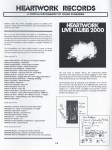
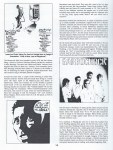
A discography and overview of Sweden’s late 70s/early 80s HEARTWORK RECORDS. Originally in Siltbreeze fanzine, later picked up in Brain Transplant #1 in 1997.

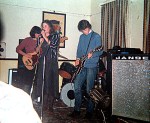
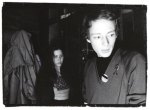
NAKED SPOTS DANCE, early 80s Wellington, NZ band with several amazing tracks on the “Four Stars” compilation. I’ll be playing one of them on the next Dynamite Hemorrhage Radio, which I’ll roast up this evening.
(Originally posted on my Hedonist Jive blog, right after I finished this book in 2011)
I took a break from heavy non-fiction this month to instead lay into the story of one of the heaviest rock and roll bands of all time, the almighty BLACK FLAG. This could have been an awful book – I had to read a chapter in the bookstore just to make sure I wasn’t getting into some Vice Magazine or Behind The Music-style retelling of what I knew to be a pretty bewildering and wildly interesting saga – and once assured, I actually downloaded it onto my new Kindle (!), making for some real cognitive dissonance whilst reading of this bootstrapping, pioneering punk rock band on a 21st-Century piece of technology.
Stevie Chick’s “SPRAY PAINT THE WALLS” is a better-than-solid unwrapping of the legacy left by a band who punished themselves to create some of the most roaring, nihilistic musical art of all time. More than anything, it’s about guitarist, band founder and prime mover Greg Ginn, who’s one of the only people involved who gave the author zero to work with and completely ignored this project while it was being written.
After reading this, what was once fairly obvious became 100%, no-doubt-about-it truth: Black Flag was Greg Ginn’s band, and he ran it like a personal fiefdom, with psychological power plays and summary figurative execution of his bandmates his stock in trade. It’s not like it’s something to be mad about or anything – I mean, it’s just the story of a rock and roll band, not a nation or an oppressed people – but for a band this important to my life personally and to that of many others, it makes for pretty riveting reading as you see how Ginn’s decisions and hang-ups made the band what it was.
Now, granted, I never saw Black Flag play, which grates to this day. There’s one good reason why – by the time I was old enough to actually pay to go see them, around 1984 or so, me and my friends though they pretty much blew. And guess what? They did! Though the book still makes a valiant effort to describe thinly-produced plod-metal records like “Loose Nut” and “In My Head” with the same level of reverence and detail it does the amazing 1978-81 stuff, it’s pretty clear that the author shares my bias that the only Black Flag worth engaging discussion in is everything up until “MY WAR” came out, with everything after that being an interesting story and that’s about that.
Black Flag was a total joke to us as they were hoofing it around the country those last two years, with the straining, sweating, whining, “life-is-pain” magnum opi they’d play while dressed in dolphin shorts to baffled punks looking to slam and stagedive. Granted, that confrontational, two-steps-ahead approach to music creation is what makes them interesting to read about, but certainly not to listen to at the time.
Henry Rollins fell far deeper under the shadow of Ginn’s neuroses and ego than I’d ever contemplated previously, but it makes sense. When he was recruited to join Black Flag in 1981 – a great move, by the way, as there’s no doubt that Rollins was a terrific frontman, if only my second favorite vocalist of theirs after the mighty Dez – he seemed like a confused but goofy punk kid with something of an attitude about him. Shortly thereafter, after moving into Ginn’s parents’ house and indoctrination into the punishing Beefheartian daily practice routines that Ginn mandated for any Black Flag member, he turned into “Henry Rollins”, the musclebound, longhaired nihilist who could give physical presence to Ginn’s admittedly absurd I-hate-myself lyrics. I mean, it seemed to work at the time. Their “DAMAGED” record from ‘81 is, of course, a masterwork of demented rock and roll art, and one of my favorite records of any era. But the Rollins that emerged from that – the funny guy you see on TV – is probably a lot more like the guy who entered the band as well. The guy in between may have been pretty friggin’ intense, but I almost feel like he was “Stockholm Syndromed” a bit by Ginn after reading this book.
Black Flag made way too many missteps along the way, even in their glory years, when the fury and squall of Ginn’s guitar was absolutely magical and like nothing before or since. Think “TV Party”. Think “Louie Louie”. Think Ron Reyes as a vocalist, the band’s strong EP “Jealous Again” notwithstanding.
And later on, contemplate the damage that marijuana played on Ginn’s ability to craft a song anyone would want to listen to. This book, without going too deep on it, makes it clear that Ginn, who was already completely lost in his art, became a dope smoker of the highest order, sometimes too baked to play & who had to have everything set up for him by the rest of the band so he could shake his hair and lose himself in some minutes-long improvised lead. Yikes.
I saw Ginn’s stoner/instrumental trio GONE play live very shortly after Black Flag broke up, probably in late 1986 or early 1987, and that was exactly my impression. There were only 5 people there to see them open for fIREHOSE on the latter’s first tour, which should tell you something about how Black Flag were perceived by most people by that point, with their important records and most goodwill long, loooong behind them. Ginn came up to where we were sitting – it was too boring for us to stand – and inches away, he confrontationally shook his ass-length hair directly in our faces as he weedly-weedlied out some pompous solo. It was either a good-hearted call to action to help raise us from our lethargy and transport us to the astral plane, or because he was totally baked beyond belief. It was pretty funny, and to this day it’s the only time I ever saw him play live and is the mental picture I get whenever I think of the guy.
Back to the book. Early on Stevie Chick almost lost me when he started in on the whole (paraphrasing here) “California is a land of sea, surf and good vibrations – but there was a dark side lurking underneath the sunny exterior” method of describing how violent punk rock came to be in Southern California. Yet he rights the ship very quickly, and in short order, does an excellent job describing the Rodney’s English Disco era, the town of Hermosa Beach, the Masque era and on and on into Black Flag’s rise as the parent-terrifying kings of worldwide punk rock.
There were some terrific stories I’d never read before, many of which are told by first singer Keith Morris, who’s always been a favorite of mine, a total clown prince with a quick mind and the classic SoCal wastoid personality. Various Minutemen, Meat Puppets and other leading lights are interviewed, with a surprising load of interviews with & Black Flag tales by Masque founder Brenden Mullen, whom I’d always read “never booked Black Flag because he didn’t like bands that weren’t from Hollywood”. Read this book and you’ll definitely get his contrary take in spades. He convincingly claims he was even asked to be in the band at one point (!!).
Once the book got going, I absolutely devoured it on my Kindle and iPhone (dork!). Sure, its material includes the source data for everything I once considered important in this world, as the music that poured from Southern California during this time was among the most powerful influences on, and succor for, my life, particularly in my late teens and twenties. But it really never lets down. Even when we’re in the “Slip It In” era and beyond, you’ve got Kira giving great interview, as well as Rollins himself and all manner of hangers-on. Want to learn more about what NIG-HEIST was? This is your book – the ‘Heist gets a lot of play.
I’d recommend this to anyone who’s read my review this far, because obviously you know what a special band Black Flag were, all missteps and badly-produced records notwithstanding. I’d imagine this will be the last word on their complete saga until Ginn emerges to tell the tale his way. Now that will be a hoot.
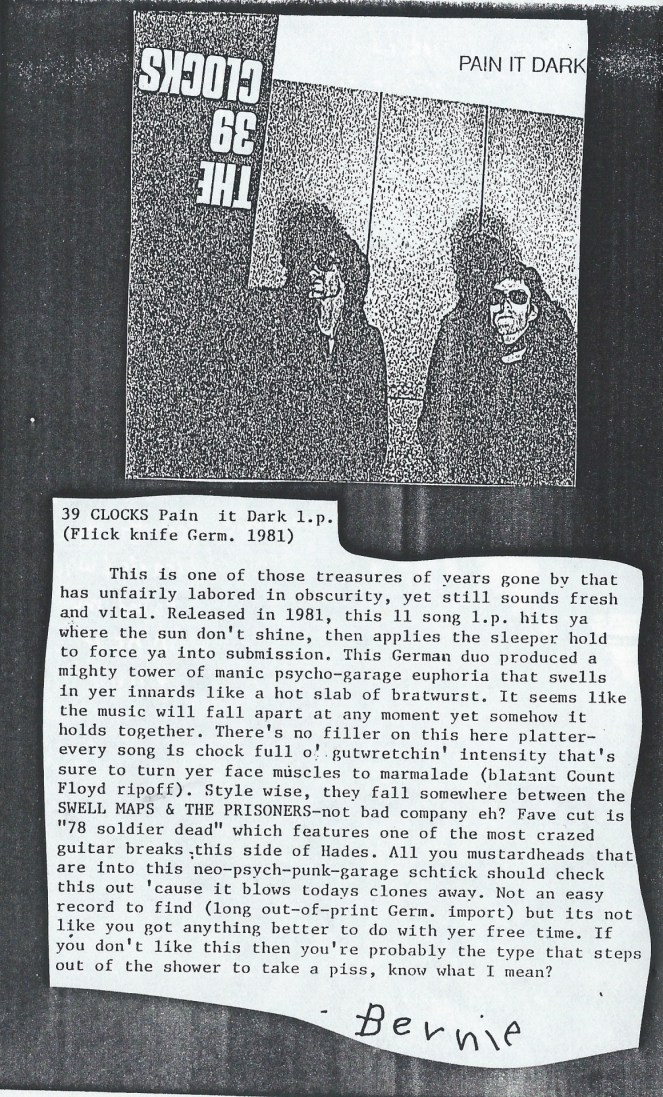
39 CLOCKS review from “Bernie”, aka Tom Lax, in Siltbreeze fanzine #4, appx. 1988.
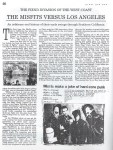
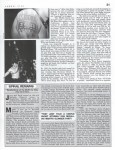
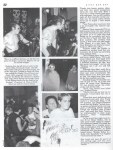
“The Misfits Versus Los Angeles” – a great feature in an early 90s issue of the much-missed GREAT GOD PAN fanzine.
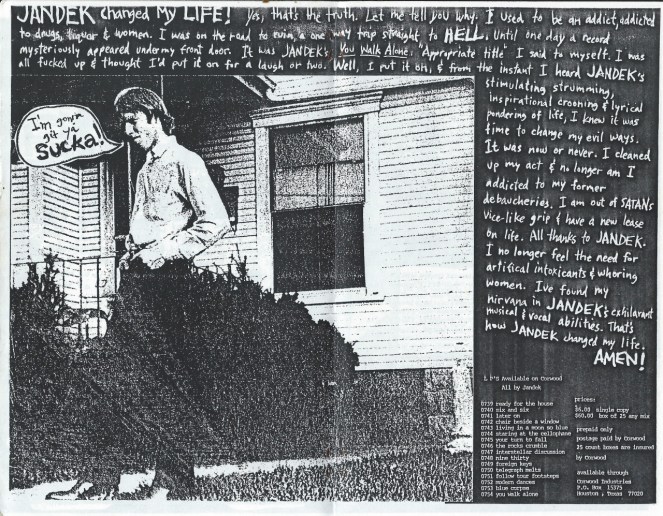
Tom Lax on JANDEK in Siltbreeze fanzine #4, approximately 1988.

