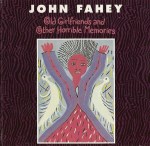
“John Fahey is an incorrigible person – absolutely amazing, completely inventive, but one of those souls whose propensity it is to fail.”
LESLIE GAFFNEY, Publisher & Boss
POPWATCH #4 1993 (page 71)
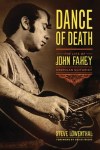
- Superdope and dynamitehemorrhage writer Jay Hinman wrote this about Dance Of Death at Goodreads: “Fahey’s been ripe for a book-length deconstruction even long before his 2001 death, but it’s truly the swelling cult of worship around his dazzling four decades of guitar work that’s propelled enough interest to warrant it. Steve Lowenthal, a writer and record label head, does an admirable job at relaying the complexities and alternately misanthropic and large-hearted character of the man, keeping his biography rooted more in name/date/order facts, and in quotes from Fahey’s ex-associates and –wives, than in conjecture or analysis. One comes away with even more appreciation for just how creatively out of step Fahey was with his times, and how he was deeply sub-underground & “alternative” well before the terms had even been used in relation to music, or humanity. Lowenthal takes the biography chronologically, starting with childhood life in Takoma Park, Maryland and ending with Fahey’s late-in-life existential conversion to the course of free noise & radical experimentation (much of which, it’s made clear, was quite likely the burden of age and declining health, and not being able to pluck & play acoustically any longer). We get some good detail on Fahey’s discovery of Charley Patton and the blues; his record-collecting and canvassing in the Deep South with Dick Spotswood, Joe Bussard and other collecting luminaries; and how he sort of fell in to being a guitar virtuoso and a creator of some of the most incredible, symphonic and detailed guitar ever created. In between we see how Fahey’s pranksterism, introversion, abuse of alcohol and pills, and his abundant willingness to talk down to his audience both built his mystique and throttled many aspects of his career. Though I’ve never liked even a smidgeon of the post-rebirth, late 90s noise/improv Fahey (it’s clear that Lowenthal thinks it’s crap as well), the last few chapters detailing his belated connections to the American indie underground are outstanding. His hatred of the hippies and of the 70s shorthand that connected his instrumental guitar playing with “new age” music comes full circle, in which he finally finds a group of weirdos on the margins of music who are very like him. Yet his sloth, unpredictability and many flights of bizarre fancy are even too much for many of them, and there are some great (if a bit tragic) anecdotes from folks in his later-years orbit about just how uniquely bullheaded this guy was. Fahey was the late-20th century manifestation of the absinthe-guzzling creative iconoclasts of previous centuries, and his outsized contributions to the arts exist on a timeline that stretches back still further. Lowenthal did a fine job at documenting it, and leaves room for a more critical and contextual examination of Fahey’s work for someone else to tackle.”
- Speaking of Jay Hinman and books, he just published yet another zine [May 2015], this one exclusively devoted to…books! Hedonist Jive Book Review: “…Debut digital-only issue now available for free – featuring an interview with Jodi Angel; a sweeping overview of Rick Perlstein’s non-fiction trilogy on America’s turbulent 1960s and 70s; “The Final Word on E-Readers”, and over 20 book reviews. Read it on Issuu or download the PDF now.”
 AGONY SHORTHAND